
Poverty
FDA-approved edible cotton could help meet global protein demand — Genetic Literacy Project

Clean Water & Hygiene are essential for poor countries to join the 21st Century
World Vision leads the way in developing Clean Water, Hygiene Education and Sanitation in poor countries Worldwide. World Vision’s global water, sanitation, and hygiene (WASH)
program has a goal to eliminate this need by 2030 in all areas they serve. In 2018 World Vision’s global water, sanitation, and hygiene (WASH) program reached an incredible 4 million people with clean water, 2.8 million with sanitation, and 5 million with hygiene education. Using their boots on the ground, local and global partnerships approach to solving problems, they are on track to meet the ambitious goal of providing clean water to everyone in the countries they serve by 2030. See below for excerpts from their Water Global 2018 Annual Report and a link to the complete report.

“We remain committed to reaching everyone, everywhere we
work with clean water by 2030—an ambitious but achievable
goal that means reaching 50 million people between 2015 and
2030. As an interim goal—and to make sure we remain on
track—we’ve committed to reach 20 million people between
2015 and 2020. This report demonstrates that we are on
track to fulfill that commitment, having reached 12.7 million
people with clean water in the first three years of this five year
commitment.” — World Vision WATER GLOBAL ANNUAL REPORT
October 2017 through September 2018
for Full Report click here
Global Reach 2018
4 MILLION PEOPLE provided with access to clean drinking water* 2.8 MILLION PEOPLE gained access to improved household sanitation 5 MILLION PEOPLE reached with hygiene behavior-change programming
2018 ANNUAL ACCOMPLISHMENTS
53,830 water points built 2018 target: 38,684 Goal met: 139%
499,244 sanitation facilities built 2018 target: 465,219 Goal met: 107%
494,067 hand-washing facilities built 2018 target: 476,966 Goal met: 104%
6,735 WASH committees formed 2018 target: 6,147 Goal met: 110%
* This includes rural community water beneficiaries (3,242,291) and municipal water beneficiaries (760,023). The 4 million people with access to water represent many of the same beneficiaries that received access to sanitation facilities and behavior-change programming. Of these, 1,210,523 were reached with World Vision U.S. private funding.
A total of 12.7 million people have accessed clean drinking water since FY16, including 3.3 million who were reached with World Vision U.S. private funding since FY16.
2018 ANNUAL SPENDING
$145.6 MILLION spent on global WASH programs during 2018.
World Vision U.S. – Private Funding & Child Sponsorship ($63.9 million) 44%
Other World Vision Offices – Private Funding & Child Sponsorship ($41.1 million) 28%
Government, International, Local – Grants & Resource Development ($40.6 million) 28%
How you can help
World Vision is the go-to source for wisely investing in a healthy, promising future for developing countries worldwide. World Vision works directly with the people, unlike some other charitable organizations, which work through governments, which may be corrupt and may keep donated goods for themselves or distribute them unfairly. You can get involved through donations, working with their teams and many other ways at either World Vision.org or World Vision Philanthropy.org. You can also sponsor a child or designate one-time or monthly donations to specific needs such as medical or educational supplies, emergency food, shelter or warm clothing. Since many companies provide goods free and only the shipping cost is needed, your donation magnifies in value. A gift catalog allows you to share the cost of larger projects such as a deep water well. Please donate or volunteer to work with their teams.
Get Out of the Way! Let Africa catch up to developed countries
get out of the way!! UN & advocacy groups keep Africa and Developing Countries where the entire Preindustrial world was in the past
Much of Africa and the developing world are where the whole world was before the advances in technology and knowledge in the 19th and 20th century; the entire world was struggling, poor and sick, so that even the more well-off people had short lifespans due to preventable and curable diseases, poor nutrition and infections. In the developed world, widespread acceptance of germ theory and the development of antibiotics and vaccines only occurred in the early to mid 20th century. Malaria, meaning “bad air,’ was only eradicated in the developed world, in the mid 20th century due to 20 plus years of spraying pesticides for effective mosquito control, development of anti-malaria medicines and window screens. Likewise, malaria in poor countries could be reduced or eradicated by allowing proper pesticide use and providing malaria medicines.
Even into the late 20th century, some isolated areas in the developed world did not have electricity, purified water or paved roads and some people still lived in drafty shacks or log cabins, sometimes with dirt floors. Before the improvements in infrastructure, large multi-generational families were the norm because of high childhood death rates and the need for surviving children to care for their parents in a world where there was no social safety net for the disabled and elderly. Large families also filled the need for labor in a world where mechanical devices were few or lacking and back breaking work was needed for every job, whether agricultural, industrial or domestic. Without reliable electricity, transportation systems and industrial and agricultural development, we all could be back there now.

Source: UN Fund for Population Activities at https://www.unfpa.org/data
This is where rural Africa and underdeveloped countries are now. What will it take for developing countries to catch up with the developed world? First, we need to end counterproductive and damaging interference by international organizations that are working under wrong assumptions from the distant past about supposed overpopulation as a cause of environmental harm. Wrong practices include imposing population control and blocking effective insect and disease control, as well as modern agriculture and infrastructure development, while putting cultural and wildlife preservation above the real immediate needs of the people. Poverty, not overpopulation, causes environmental harm. Improving the economy can stabilize the population and preserve both cultural heritage and wildlife. Modern agricultural practices can end slash and burn deforestation and feed everyone.
Africa needs Investment, Infrastructure, Employment, Education and Disease Control.
Education in hygiene can end much of the disease burden, facilitate clean water and sanitation systems, and provide a healthy workforce. Education in agricultural, industrial and technical skills can open opportunities for employment, small business earnings and raise their standard of living. Transportation in the form of improved and extended roads and railroads can end isolation, encourage foreign investment and provide access to markets, employment opportunities, education and medical facilities.
Reliable electricity is important for economic growth and can facilitate the development of transportation systems, medical facilities and industrial investment, all of which cannot run on intermittent and varying power as provided by wind and solar power. Solar panels on huts are a start, but should only be a temporary energy solution until reliable electrical systems can be installed and extended into rural areas. Solar panels should never be used as a substitute for true energy security or an excuse for neglect.
Poor countries cannot afford to skip the reliable types of energy generation that have made the developed world what it is today. The solution should include all means possible, including hydroelectric, geothermal, fossil fuel and nuclear power. Africa has enough hydroelectric potential to supply all of their needs for the foreseeable future. Hydroelectric power is both clean and reliable. In Africa alone, over 200 hydroelectric dams have been blocked by environmentalists. This must stop!
Africa needs Investment, Infrastructure, Employment, Education and Disease Control.
Foreign aid must be replaced by investment in infrastructure. Most of the foreign aid is given to prop up corrupt governments. Leaders become rich while most of the aid is not used for famine relief or to build rural infrastructure and seldom reaches the people in need. Government to government foreign aid props up corrupt leaders, makes them accountable only to their donors, not the people, and prolongs poverty. Leaders that depend on foreign aid, not the tax base, are less likely to want to attract investment in new businesses or to invest in infrastructure that facilitates economic growth. As long as the problems are not solved, foreign aid money keeps coming, so corrupt leaders benefit from keeping their countries poor and controlled.
Foreign aid, other than temporary disaster relief, must be replaced with investment in infrastructure including extended electrical systems, powered by all means available, and improved and extended roads, railroads, airports and bridges, as well as education and medical facilities, and industry. The aim is to raise the economy so that poor countries no longer need outside help, but rather are net contributors to the world economy, or at least are self sufficient. It can be done and you can help.
What can you do? Lots! Here are a few suggestions from my book. Start by contacting government officials and elected representatives to demand that perpetual government to government foreign aid be replaced with accountable infrastructure investment, and that abuses by the UN and other organizations be eliminated and better practices be implemented ASAP. Donate to charities that help build infrastructure such as World Vision and Samaritan’s Purse. Volunteer to go and work with these organizations in poor countries. Invest in businesses/industries that are selling or buying African goods or are locating new businesses in Africa, or are offering real infrastructure assistance, or are improving medical and educational facilities.
**************************************
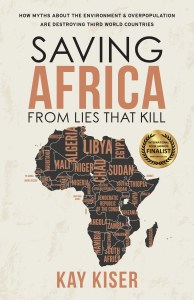
My award winning book, Saving Africa From Lies That Kill: How Myths about the Environment and Overpopulation are Destroying Third World Countries is now available online and in book stores everywhere. In print and eBook through Amazon, Barnes & Noble, Books a Million.
Award-Winning Finalist in the Social Change category of the 2019 International Book Awards
After reading the book, please remember to review it on Amazon; share it with a friend and do your part to end bad practices. Visit my blog for more information and to sign up for email updates at https://savingafricafromliesthatkill.com/ and like my Facebook page.
Read the first chapter free through Bookfunnel by clicking here
Focus on achieving wider impacts and building resilience for larger populations, Africa RISING urged — Africa RISING

The Africa RISING program should keep working towards achieving wider impacts and building resilience for larger populations, USAID Bureau for Food Security program leader for sustainable intensification, Jerry Glover, has said.
Adopting good agricultural practises was the game changer I needed! — Africa RISING (Research in Sustainable Intensification for the Next Generation)

Embracing good agricultural practices in lessons from the project has turned around the fortunes of Method Magoda, a 39-year-old farmer from Utengule Village in Kilolo District, Tanzania.
via Adopting good agricultural practises was the game changer I needed! — Africa RISING
Help Developing Countries Join the 21st Century
 How You Can Help Raise Economies and Improve Lives in Developing Countries
Reposted: Some social sites said this post was too long, so you can read the complete version at my blog here https://wp.me/p9Wxqa-d1 (recommended), or read the condensed version below which necessarily leaves out some information and references.
The list of things that need to be done to raise Africa and other developing countries out of extreme poverty and usher them into the twenty-first century is both comprehensive and achievable. Many of them involve ending interference by international organizations that often have hidden agendas unrelated to the welfare of the poor or raising the economy.
Dependency on foreign aid supports and encourages corruption and lack of accountability of government officials; it mires developing countries in debt from foreign aid in the form of low interest loans, causes inflation, discourages infrastructure improvements and economic development, and is devastating to the poor who rarely benefit from it. Instead, those in extreme poverty need education, employment, investment and infrastructure.
Included in these goals is a need for good health and relief from isolation through vehicle passable roads. As shown in previous posts, for example: Get Out of the Way! Let Africa catch up to developed countries, Immediate Solutions for Africa’s problems, Long Term Solutions to Raise Developing Countries out of Extreme Poverty, there are reasonable steps to solving these problems, both in the short term through local infrastructure investments, and longer term though financing of larger infrastructure projects such as transportation projects, hydroelectric power dams and electrical transmission systems.
Business and industrial investment and trade are the ultimate means to raise their economies out of extreme poverty. There are inviting investment opportunities, both foreign and domestic, for example see earlier posts: Investment Opportunities in Africa, New US Build Act encourages investment in Africa. The workforce is there; they just need more job opportunities, education and improved health.
As a whole, it seems like an insurmountable task, but taken item by item and step by step these problems are infinitely solvable. We have the advantage of not only having resources to help, but vast numbers of people who are disgusted with the state of affairs, want to raise the impoverished, and are willing to help, financially or through good old-fashioned, roll-up-your-sleeves hard work.
What you can do, individually or in groups
In summary, we need to stop international organizations from continuing the propaganda and activities that have kept developing countries from advancing and that have prevented them from catching up with the rest of the world; and we need to raise the destitute out of extreme poverty through free trade by building infrastructure and improving employment opportunities.
environmental harm and failure to advance are blamed on the myths of overpopulation and inferiority of poor peoples. The truth is that poverty, often caused by deliberate deprivation and isolation, not overpopulation, causes environmental harm. Raising poor peoples out of extreme poverty, improving their health and implementing modern agricultural practices will stabilize the population and end deforestation.
Get involved in any way you can, as often as you can.
I do not have all of the answers, but here are a few suggestions that can guide you to take action. Some of you, no doubt, will have other, perhaps better, ideas. The key is to get involved and stay involved in any way you can.
Information Sharing and Recruiting
Share information about short term infrastructure building charities and investment agencies through Facebook, Twitter, and other social sites. Make a YouTube video, blog, or website encouraging investment and exposing the crimes of international organizations
Inform as many people as possible about the true agenda and practices behind the following euphemistic phrases and biased propaganda. Family Planning and Reproductive Health, Sustainable Agriculture, Climate friendly power, Cultural preservation.
Contact agencies and government officials that are able to change things and spread the word about the need for ending practices such as population control programs, denial of DDT, denial of GMO and high yield crops, and modern agriculture; denial of clean water, sanitation and hygiene education; and denial of electricity by all means except solar and wind.
Call or write your congressman, the president, cabinet secretaries, state department heads. Include local and state governments and business organizations that can partner with organizations in developing countries or encourage investment.
Join or donate to groups opposed to these misguided actions or that support major improvements. For example Population Research Institute is fighting the overpopulation myth and human rights abuses in population control programs in thirty countries.
Send my book, Saving Africa from Lies That Kill: How Myths about the Environment and Overpopulation are destroying Third World Countries or excerpts from it to important people that can get things done and influence others. Read the first chapter free through Bookfunnel at www.bit.ly/
Follow my blog, Saving Africa from Lies that Kill at www.savingafricafromliesthatkill.com. Reblog posts or use the links to repost on Twitter, Facebook and other social sites.
Charitable Activities
Donate to charities that build immediate infrastructure: wells, toilets, sand dams, sand filters, roads, improved housing, schools, and medical facilities by working directly with the people, not the governments, which may keep most of the donations. Recommended: World Vision, Samaritan’s Purse, Christian Broadcasting Network.
Medicine and health care supplies are badly needed. For many of these organizations, generous donors will match your donation. If you work for a corporation, many of them will match your donations, so you need to ask them if they support the charity to which you want to donate. Because many companies donate most of the materials and supplies, your donations may only have to cover the cost of shipping, so that your gift multiplies by typically five to eight times. Most of these charities have a catalog that allows you to see the options and their cost. Sponsoring a child or family can also be used to build schools and other infrastructure for an entire village.
Check out charities to make sure most of the money donated goes to aid the people, not the administration of the charity or receiving countries’ governments.
Support Christian missionaries in developing countries through your church. Along with preaching the Gospel, missionaries are involved in the communities they service in various ways including teaching, health care, and infrastructure improvements.
Go on summer mission trips with your church or other organization offering medical and educational assistance.
Volunteer to go and use your own talents and skills to help:
- Build infrastructure such as wells, sand dams, schools, clinics, improved housing, agricultural projects, roads, and more.
- Teach basic education, hygiene, agriculture, building trades, small business administration, and other needed skills.
Offer scholarships for outstanding students in these countries. Foundations, church and civic groups can sponsor scholarships, grants, or loans for education. Ask about existing scholarship programs and donate to worthy ones that help people from developing countries.
Visit African and developing countries. Tourism is a significant source of income for many African and other developing countries.
Business Opportunities
Buy products from Africa and other developing countries.
Sell products from Africa and other developing countries in your own online or brick-and-mortar stores using online wholesale suppliers
Support businesses that locate or are willing to locate facilities in African or other developing countries. Inquire about pension and retirement plans to determine and request investments to include stocks and bonds in African or other developing countries.
Invest in African stocks or in companies that invest in Africa and other developing countries or in mining, manufacturing companies, and other industries with facilities in developing countries.
Start a new business: If you have funds to invest in new ventures or own a business, whether in manufacturing, communications, services, merchandising, mining, etc., consider opening a branch in an African or other developing country and hiring and training local people from their abundant workforce.
Build a company town to support their or your new manufacturing, mining or extractive business, their/your local employees and their families. You may want to locate a company town near city slums where there is a ready workforce in need of employment. Company towns can provide safe homes, electricity, clean water and sanitation, education and medical facilities for employees and their families, ensuring a healthy and loyal workforce.
Opportunities abound in African and other developing countries and are just waiting for someone with the insight and courage to implement them. Africans don’t need handouts to stay poor; they need jobs and someone to give them an opportunity.
The bottom line is to get and stay involved, however you can, in activities that will ultimately raise the economies of developing countries, lift the rural population out of extreme poverty, end practices by outside organization that are contrary to the needs of the people and usher them into the twenty-first century. Africa and the developing world have a promising and bright future, but it will take all of us to foster the changes that are needed. It is possible, and you can make a difference. Many people will say, “Let George do it.”
Today, You Are George. What can you do? What will you do?
“If a brother or sister be naked, and destitute of daily food, and one of you say unto them, ‘Depart in peace, be ye warmed and filled’; notwithstanding ye give them not those things which are needful to the body; what doth it profit? Even so, faith, if it hath not works, is dead, being alone. Yea, a man may say, ‘Thou hast faith, and I have works’: show me thy faith without thy works, and I will show thee my faith by my works.” – James 2:15-20, KJV Bible
******************************************
 The book: Saving Africa from Lies that Kill: How Myths about the Environment and Overpopulation are Destroying Third World Countries is available in print and eBook online at Amazon, Barnes & Noble, Books a Million and in bookstores. If you like the book, please leave a review online at Amazon.com or other outlet.
Award-Winning Finalist in the Social Change category of the 2019 International Book Awards
Read the first chapter free through Bookfunnel at www.bit.ly/
How you can help Developing Countries join the 21st Century
You Really Can Help Raise Economies and Improve Lives in Developing Countries
The list of things that need to be done to raise Africa and other developing countries out of extreme poverty and usher them into the twenty-first century is both comprehensive and achievable. Many of them involve ending interference by international organizations that often have hidden agendas unrelated to the welfare of the poor or raising the economy. Funding is a key component to the implementation of these Western interference programs, so they are vulnerable to change. Campaigns to expose and defund them can have a significant impact on their donor base.
Dependency on foreign aid supports and encourages corruption and lack of accountability of government officials; it mires developing countries in debt from foreign aid in the form of low interest loans, causes inflation, discourages infrastructure improvements and economic development, and is devastating to the poor who rarely benefit from it. Instead, those in extreme poverty need education, employment, investment and infrastructure.
Included in these goals is a need for good health and relief from isolation through vehicle passable roads. As shown in previous posts, for example: Get Out of the Way! Let Africa catch up to developed countries, Immediate Solutions for Africa’s problems, Long Term Solutions to Raise Developing Countries out of Extreme Poverty, there are reasonable steps to solving these problems, both in the short term through local infrastructure investments, and longer term though financing of larger infrastructure projects such as transportation projects, hydroelectric power dams and electrical transmission systems.
Business and industrial investment and trade are the ultimate means to raise their economies out of extreme poverty. There are inviting investment opportunities, both foreign and domestic, as discussed previously, for example see earlier posts: Investment Opportunities in Africa, New US Build Act encourages investment in Africa. The workforce is there; they just need more job opportunities, education and improved health. Free trade markets work every time; socialistic systems of dependency and top down control fail the people every time they are tried. It is illogical to believe that the successful market system that has raised the rest of the world out of poverty would not work here, too.
Education, employment, investment, and infrastructure are the keys to saving Africa and other developing countries.
As a whole, it seems like an insurmountable task, but taken item by item and step by step these problems are infinitely solvable. We have the advantage of not only having resources to help, but vast numbers of people who are disgusted with the state of affairs, want to raise the impoverished, and are willing to help, financially or through good old-fashioned, roll-up-your-sleeves hard work.
What you can do, individually or in groups
In summary, we need to stop international organizations from continuing the propaganda and activities that have kept developing countries from advancing and that have prevented them from catching up with the rest of the world; and we need to raise the destitute out of extreme poverty through free trade by building infrastructure and improving employment opportunities. The myths of overpopulation and inferiority of poor peoples are blamed for environmental harm and failure to advance. The truth is that poverty, often caused by deliberate deprivation and isolation, not overpopulation, causes environmental harm. Raising poor peoples out of extreme poverty, improving their health and implementing modern agricultural practices will stabilize the population and end deforestation.
Get involved in any way you can, as often as you can.
I do not have all of the answers, but here are a few suggestions that can guide you to take action. Some of you, no doubt, will have other, perhaps better, ideas. The key is to get involved and stay involved. These suggestions fall roughly into three main categories:
- Information Sharing and Recruiting;
- Charitable Activities; and
- Business Opportunities
Information Sharing and Recruiting
Share information about short term infrastructure building charities and investment agencies through Facebook, Twitter, and other social sites. Make a YouTube video, blog, or website encouraging investment and exposing the crimes of international organizations such as the United Nations, World Health Organization (WHO), World Bank, UN Fund for Population Activities (UNFPA), UN Educational, Scientific and Cultural Organization (UNESCO), International Planned Parenthood Federation (IPPF), Greenpeace, Worldwide Fund for Nature, formerly World Wildlife Federation (WWF), Population Council and Club of Rome. Please, copy my ideas and add your own.
Inform as many people as possible about the true agenda and practices behind the following euphemistic phrases and biased propaganda. Sunlight is a powerful disinfectant.
- Family Planning and Reproductive Health mean forced or coerced, (through bribes or withholding of benefits), sterilization, abortion, IUD insertion, injected drugs, while failing to stock clinics with much needed medicines and supplies.
- Sustainable Agriculture means denial of modern agricultural practices that would end slash and burn deforestation, and denial of high yield and/or GMO improved crops for drought, pest and disease resistance, higher yields and better nutrition.
- Climate friendly power means solar and wind energy only and denial of fossil fuel and hydroelectric power, which are necessary first step toward ending Energy Poverty.
- Cultural preservation means denial of hygiene education, clean water, DDT for treating walls against malaria, access to medical facilities, roads and electricity. See the post DDT Needed Now in Underdeveloped Countries for safety facts about DDT, which, though much maligned, is really safer than alternatives and could save millions.
Contact agencies and government officials that are able to change things and spread the word about the need for ending practices such as population control programs, denial of DDT, denial of GMO and high yield crops, and modern agriculture; denial of clean water, sanitation and hygiene education; and denial of electricity by all means except solar and wind.
Call or write your congressman, the president, cabinet secretaries, state department heads, USAID (United States Agency for International Development) chairman and department heads, directors of EPA, FDA, USDA and other US government agencies, UN ambassador, African and developing countries’ ambassadors and delegates to UN and USA, heads of governments or agencies that deal with the problems, such as WHO, World Bank, other agencies. Include local and state governments and business organizations that can partner with organizations in developing countries or encourage investment.
Join or donate to groups opposed to these misguided actions or that support major improvements. For example Population Research Institute is fighting the overpopulation myth and human rights abuses in population control programs in thirty countries. PRI was founded by Stephen Mosher who wrote Population Control, Real Costs, Illusory Benefits.
Send my book or excerpts from it to important people that can get things done and influence others. See below for information and to read the first chapter free. (Kindle version is only $2.99 through Amazon.) Permission is given here to reproduce sections of my book freely to spread its message of hope and recovery.
Follow my blog, Saving Africa from Lies that Kill at www.savingafricafromliesthatkill.com. Reblog posts or use the links to repost on Twitter, Facebook and other social sites. Contact me about posting your own related information as a guest author. Share the information about the blog with as many people as you can so they, too, can spread the word and help alleviate unnecessary suffering.
Charitable Activities
Donate to charities that build immediate infrastructure: wells, toilets, sand dams, sand filters, roads, improved housing, schools, and medical facilities by working directly with the people, not the governments, which may keep most of the donations. My favorites are World Vision and Samaritan’s Purse. Most of these organizations give you a chance to designate donations for specific needs, and you can donate an affordable share to a larger investment such as a hand drilled or deep water well. For example, last year I donated money to install a hand drilled well. Other years I have donated to a share of larger projects and/or medicines and emergency nutritional support. CBN, Christian Broadcasting Network is another reliable organization that works internationally to help people in developing countries through their partners. Many other agencies offer child sponsorship and help to the poor, but be sure they are working directly with the people, not through governments, which may skim off much of the donations.
Medicine and health care supplies are badly needed. For many of these organizations, generous donors will match your donation. If you work for a corporation, many of them will match your donations, so you need to ask them if they support the charity to which you want to donate. Because many companies donate most of the materials and supplies, your donations may only have to cover the cost of shipping, so that your gift multiplies by typically five to eight times. Most of these charities have a catalog that allows you to see the options and their cost. Sponsoring a child or family can also be used to build schools and other infrastructure for an entire village.
Check out charities to make sure most of the money donated goes to aid the people, not the administration of the charity or receiving countries’ governments. Agencies that oversee charitable organizations include:
- Charity Watch at https://www.charitywatch.org/home,
- Charity Navigator at https://www.charitynavigator.org/ and
- Guide Star at https://www.guidestar.org/
Support Christian missionaries in developing countries through your church, or other organization such as Baptist International Missions, Inc. (BIMI.org). You can find others on the internet by searching for missionary organizations. My church supports almost a hundred missionaries. Ask if yours supports missionaries and encourage them to do so. While their primary focus is on sharing the Good News of salvation through Jesus Christ, missionaries are also involved in the communities they service in various ways including teaching, health care, and infrastructure improvements. One of the people we support specializes in drilling clean water wells.
Go on summer mission trips with your church or other organization offering medical and educational assistance. Samaritan’s purse also offers opportunities to get involved in developing countries.
Volunteer to go and use your own talents and skills to help:
- Build infrastructure such as wells, sand dams, schools, clinics, improved housing, agricultural projects, roads, and more.
- Teach basic education, hygiene, agriculture, building trades, small business administration, and other needed skills.
Offer scholarships for outstanding students in these countries. Foundations can start scholarship funds for training future leaders in government, industry, academia, healthcare and business. In exchange for support, participants can agree to return to their own countries to help build the future. Church and civic groups can sponsor scholarships, grants, or loans for education. Ask about existing scholarship programs and donate to worthy ones that help people from developing countries.
Visit African and developing countries. Tourism is a significant source of income for many African and other developing countries.
Business Opportunities
Buy products from Africa and other developing countries. Use the internet to search for products you want. Africa Freak at http://africafreak.com/where-to-buy-the-best-african-online-products/ is a clearinghouse for websites that sell African goods, listed and linked by categories such as textiles, clothing, arts and crafts, cosmetics, jewelry, groceries, home and décor, ceramics, safari and sports equipment, photographs, books, etc. This is not a recommendation of any site or product line. These are just examples from sites I found on the internet. Do your own searches and check out their legitimacy before purchasing or investing.
Sell products from Africa and other developing countries in your own online or brick-and-mortar stores using online wholesale suppliers like Africa Imports at https://africaimports.com/. This is not a recommendation of any site or product line. These are just examples from sites I found on the internet. Do your own searches.
Support businesses that locate or are willing to locate facilities in African or other developing countries. If you are employed by a large corporation, or have stock in one, find out if they have or are willing to locate facilities or partner with businesses in Africa. Inquire about pension plans and retirement IRA plans to determine and request investments to include stocks and bonds in African or other developing countries.
Invest in African stocks or in companies that invest in Africa and other developing countries or in mining, manufacturing companies, and other industries with facilities in developing countries. Two useful guides to investment in African countries are as follows.
Rand Merchant Bank is an investment bank headquartered in South Africa. RMB brochure, “Where to Invest in Africa” can be downloaded without charge at https://www.rmb.co.za/where-to-invest-in-africa-2018-edition/ by those seriously interested in learning about investing in Africa.
African Development Bank Group is another source of economic and investment information, among other sources. “African Economic Outlook 2018” is available for free at https://www.afdb.org/en/knowledge/publications/african-economic-outlook/.
Top Five of the Twenty-nine Stock Exchanges in Africa
| Exchange | Market Capitalizations | Number of Listings |
| 1. Johannesburg Stock Exchange (JSE) | $987 billion | 388 |
| 2. Nigerian Stock Exchange (NSE) | $44 billion | 176 |
| 3. Egyptian Stock Exchange (EGX) | $46 billion | 222 |
| 4. Casablanca Stock Exchange (Casa SE) | $48 billion | 75 |
| 5. Namibian Stock Exchange (NSX) | $76 billion | 36 |
Source: © Copyright 2018| Nairametrics
Start a new business: If you have funds to invest in new ventures or own a business, whether in manufacturing, communications, services, merchandising, mining, etc., consider opening a branch in an African or other developing country and hiring and training local people from their abundant workforce.
Build a company town to support their or your new manufacturing, mining or extractive business, their/your local employees and their families. You may want to locate a company town near city slums where there is a ready workforce in need of employment. Company towns can provide safe homes, electricity, clean water and sanitation, education and medical facilities for employees and their families, ensuring a healthy and loyal workforce.

Opportunities abound in African and other developing countries and are just waiting for someone with the insight and courage to implement them. Africans don’t need handouts to stay poor; they need jobs and someone to give them an opportunity. Let me say one thing about wages in these countries. In most cases, expecting to pay employees on the inflated Western scale is unreasonable. It is important to investigate the standards of living and average wages for similar work in the area, and to determine competitive fair wages based on that. The picture of “sweatshops,” although some really do exist, is a scare tactic used by those who wish to keep these countries poor and “in their place.” Employees in these areas can and should be treated humanely and fairly and be paid a competitive wage that will help their families and the overall economy.
The bottom line is to get and stay involved, however you can, in activities that will ultimately raise the economies of developing countries, lift the rural population out of extreme poverty, end practices by outside organization that are contrary to the needs of the people and usher them into the twenty-first century. Africa and the developing world have a promising and bright future, but it will take all of us to foster the changes that are needed. It is possible, and you can make a difference. Many people will say, “Let George do it.”
Today, You Are George. What can you do? What will you do?
“If a brother or sister be naked, and destitute of daily food, and one of you say unto them, ‘Depart in peace, be ye warmed and filled’; notwithstanding ye give them not those things which are needful to the body; what doth it profit? Even so, faith, if it hath not works, is dead, being alone. Yea, a man may say, ‘Thou hast faith, and I have works’: show me thy faith without thy works, and I will show thee my faith by my works.” – James 2:15-20, KJV Bible
“Also, I heard the voice of the Lord, saying, ‘Whom shall I send, and who will go for us?’ Then said I, ‘Here am I; send me.’” —Isaiah 6:8, KJV Bible
******************************************
For recent posts from my book and related articles like this, sign up to follow my blog by email at http://Savingafricafromliesthatkill.com. Thank you.
The book: Saving Africa from Lies that Kill: How Myths about the Environment and Overpopulation are Destroying Third World Countries is available in print and eBook online at Amazon, Barnes & Noble, Books a Million and in bookstores. If you like the book, please leave a review online at Amazon.com or other outlet.
Award-Winning Finalist in the Social Change category of the 2019 International Book Awards
Read the first chapter free through Bookfunnel at www.bit.ly/
2019 International Book Award winners announced

2019 International Book Award winners announced.
Saving Africa from Lies That Kill: How Myths about the Environment & Overpopulation are Destroying Third World Countries by Kay Kiser is an award winning finalist in Social Change category of the 2019 International Book Awards.
Read the first chapter free through Bookfunnel at www.bit.ly/savingafricachapter1
 Back Cover Text: In Saving Africa From Lies That Kill, Kay Kiser exposes the long-standing crimes committed against developing nations by the United Nations, World Bank, USAID and Planned Parenthood. Under their guise of “aid,” these organizations mire the underprivileged in isolation, poverty, sickness, and ignorance.
In her book, Kiser argues:
•Poverty, not overpopulation, causes environmental damage. Higher standards of living and lower infant mortality can improve the environment and stabilize the population.
•Developing nations need access to reliable electricity in order to end energy poverty. This will, in turn, provide clean water, develop transportation, and power hospitals, homes and industrial investment.
•Africans aren’t lazy; they’re weakened from malaria, parasites and dysentery. They need insect and disease control for a healthy workforce.
•The Green Revolution and modern agriculture can feed everyone and end deforestation.
Fortunately, you can do something about the problem—and Kiser shows you how!
What you can do
Buy the book: available in book and ebook formats at Amazon, Barnes & Noble, Books-a-Million and fine booksellers everywhere. Share it with others.
Leave a review on Amazon (scroll to the bottom of the sales page to leave a review)
Apply the methods discussed in the final chapter as they apply to you. Get involved.
Follow the Blog at www.savingafricafromliesthatkill.com
View the video trailer at New hope for Africa vs. Old stagnation
New hope for Africa vs. Old stagnation
Africans need Investment, Infrastructure, Education, Employment and Disease Control, not Foreign Aid
There is New Hope for Africa vs. Old Stagnation – and you can help
Africa is two worlds: the cities, which are growing economically at a fast pace, and the rural poor who lack infrastructure needed for raising themselves above poverty and disease. Between these are fairly prosperous market agricultural areas and unemployed job seekers who inhabit substandard housing encircling cities.
Poverty is prolonged by long-standing wrong attitudes and practices that are so entrenched in our world view that many do not see any other way. The colonial powers failed to develop the needed infrastructure for development except marginally in the cities, so the rural poor remained isolated and stuck in poverty, disease and unemployment. Upon independence, Communists or their puppets replaced colonialists in most of these countries, but continued the same bad practices and attitudes.
Foreign aid has been a disaster for these countries because of the lack of accountability and corruption of local governments. Country leaders kept/keep most of the money and grew/grow extremely wealthy, while at the same time, failing to build roads, railroads, electrical systems, education systems and health facilities, and to develop job opportunities by encouraging investment. Corrupt leaders were/are only accountable to donor nations/organizations and unaccountable to the people. Relying on foreign aid and not the tax base of the country meant there was/is no incentive to encourage investment and to develop infrastructure that would support business expansion and job opportunities.
Communist attitudes toward free markets and propaganda against foreign investment only deepen the tendency to keep these countries poor and under top-down control. At the same time, this situation has fostered violent resistance by factions not favored by the government, which had to be strictly controlled and squashed as it arose. Violence and unrest in any form and government corruption serve to discourage foreign investors as well as charitable organizations that could help raise the health and economy of the rural poor.
Investment and infrastructure are key to economic development and ending extreme poverty. Government to government foreign aid should be stopped immediately except for short-term emergency assistance during disasters, and only with complete accountability about how the money is spent, as well as assurances that the distribution is done fairly. Any foreign assistance for infrastructure projects should involve paying engineering firms directly, not funneling funds through corrupt officials who might pocket most of the money and promise but never deliver results.
African economies have historically been based on agriculture and extraction industries. Most of Africa’s agricultural businesses have been based on small to medium farms, but are profitable only in areas where transportation infrastructure permits access to markets. Development of roads and railroads is important to expand agricultural opportunities and markets. With improved crop varieties and modern agriculture Africa can provide much needed food for the world, but only if markets and ports are accessible.
The exploitation of natural resources by colonial powers without just compensation has been used as an excuse to discourage foreign investment in mining and extraction activities. It is only exploitation if the country and its people do not benefit and profit from the activity. Communist propaganda confuses the two approaches, so that businesses that could benefit the economy are discouraged. Agricultural and extraction industries with their associated infrastructure development can help to raise economies and standards of living by providing jobs and putting an end to high rural unemployment.
In the cities, manufacturing, banking, service, technical and communications industries are rapidly developing in areas where governments have improved business opportunities and practices. Ease of doing business, stable governments with low corruption levels and adequate infrastructure encourage investment that can raise economies. Opportunities and workforce availability make African countries a good place to invest and open new businesses.
*************************************
If you like this post please share it with your friends, and sign up to follow my blog by email at http://Savingafricafromliesthatkill.com. Thank you.
The book: Saving Africa from Lies that Kill: How Myths about the Environment and Overpopulation are Destroying Third World Countries is available in print and eBook online at Amazon, Barnes & Noble, Books a Million and in bookstores. If you like the book, please leave a review online at Amazon.com or other outlet.
Award-Winning Finalist in the Social Change category of the 2019 International Book Awards
Read the first chapter free through Bookfunnel at www.bit.ly/