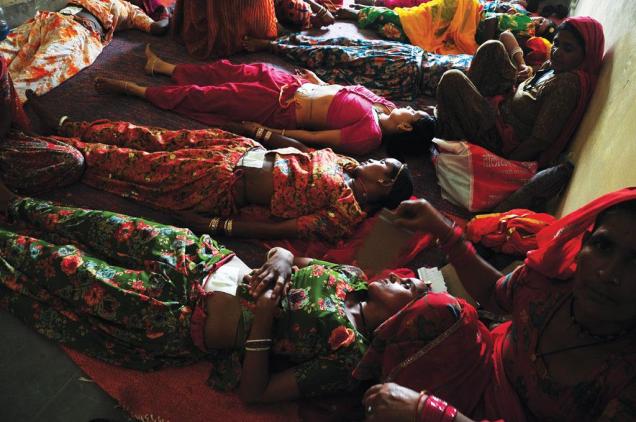
Long Term Solutions to Raise Developing Countries out of Extreme Poverty

Mass Sterilization in India – after care for botched sterilizations

Long Term Solutions for Developing Counries

  1. End Population Control Campaigns
  2. End DDT Bans to reduce Malaria, etc.
  3. Implement Hygiene Education Programs
  4. Aggressively Treat All Worm Infestations
  5. End Insistence on Subsistence Farming
  6. End the European Union Ban on Importing GMO Crops
  7. End Insistence on Solar and Wind Power Only
  8. Provide Electricity and Clean Water Systems for City Slums and Rural Villages
  9. Encourage Foreign and Domestic Investment
  10. End foreign aid without full accountability

 DETAILS

  1. End Population Control Campaigns.
    • We need to work to stop these campaigns by groups such as UNFPA, USAID, WHO, World Bank, International Planned Parenthood, Population Council, and Club of Rome. A few ways to do this are to Expose the lies about overpopulation, their sources, and their aim. The overpopulation myth is all about socialist control, racism, elitism, and misguided environmentalism. Poverty, not overpopulation is harmful to the environment. Raising people out of extreme poverty will benefit the environment.
    • Defund all programs that promote involuntary or forced sterilizations, birth control, or abortion. Promote voluntary, informed choices only. President Trump reinstated the Mexico City Policy, which withholds funds from foreign aid programs that promote or perform abortions. He also defunded UNFPA through the Kemp-Kasten amendment, which prohibits funding for any organization supporting coercive abortion or involuntary sterilization. Unfortunately, some other population control advocacy groups have stepped in to fill the gap. The US must pressure the UN and member countries to end this practice worldwide. The US must also defund Planned Parenthood.
    • End overstocking population control drugs, devices and sterilization supplies in hospitals and clinics. Use the funds from this and other population control activities to stock medical facilities with medicines and supplies for endemic diseases such as malaria, TB and parasites. Medical facilities need supplies for treating injuries, surgical supplies and vaccination sera to save children’s lives.
      • Provide sanitation, clean water and soap for handwashing for all clinics and hospitals.
      • Train local people as medical assistants in the tradition of the field medic as a first line of defense.
    • End Western values-based sex education in schools that encourages abortion, multiple partners, and thus sexually transmitted diseases. These practices are contrary to local cultural and religious beliefs and practices. We must respect their cultural and religious beliefs, which value children and family above all else. Imposing Western values on them destroys families and results in the spread of sexually transmitted diseases. Encourage monogamy and fidelity in marriage to one sexual partner as one of the best ways to reduce sexually transmitted diseases.
  2. End DDT bans to reduce Malaria, etc.
    • Begin widespread spraying in homes and medicate victims to cut the cycle of malaria and other insect-borne diseases.
    • The Environmental Protection Agency, EPA, the International Agency for Research on Cancer, IARC,  and other agencies that regulate possible toxins must change their regulations to allow DDT to be used for control of mosquitos and other insects.
    • India is a good example of how effective this approach can be. In several government facilities, India manufactures DDT and other insecticides that can be purchased by people in African and other developing countries. India sprays DDT on interior walls of homes twice a year in malaria prone areas. This practice is a good first step in ending the malaria cycle and has greatly reduced the deaths from malaria in India. Africa could reduce theirs accordingly with DDT on interior walls as well as use of bed nets. Bed nets alone are not a good substitute for DDT spraying.


Figure 27: Global Malaria Deaths[1]

India is included in the South-East Asia group.


  1. Implement Hygiene Education Programs.
    • Focus on educating all people, especially rural poor, about microbes and hygiene.
    • Teach skills needed to provide clean water
      • How to filter and purify water
      • How to make soap and set up handwashing stations
      • How to dig wells and latrines
      • Safe use of composted wastes for fields
      • How to keep waste and other contaminants out of streams.
  2. Aggressively Treat All Worm Infestations. Alongside treating for worms it’s important to provide shoes for all children to prevent re-infestation.
  3. End Insistence on Subsistence Farming as a more sustainable method. Encourage modern agricultural methods and improved varieties that are better suited to their environment, with higher nutrition and higher yields. This also ends or reduces slash-and-burn deforestation.
  4. End the European Union Ban on Importing GMO Crops. This and other protectionist philosophies, stagnate development in European countries and cause African countries to reject improved crops.
    • Educate the people and the leaders of developing countries about modern agricultural methods and the benefits of GMO and other high yield varieties.
    • Educate European leaders and farmers about the potential market for their goods in developing countries. This can be accomplished through advertising campaigns to the general public, not just entrenched government leaders.
  5. End Insistence on Solar and Wind Power Only.
    • Encourage large and small electricity projects by all means possible, including fossil fuel, hydroelectric, geothermal, and nuclear.
    • Fund large and small hydroelectric and fossil fuel power plants and transmission lines into rural areas through loans.
    • Until larger projects and grid systems can be implemented, promote local mini and micro hydroelectric, geothermal and fossil fuel systems. These small systems can be incorporated into a wider grid when that becomes available.
  6. Provide Electricity and Clean Water Systems for All City Slums.
    • Improve housing, sanitation, and clean up standing water and wastes that breed insects and disease.
    • Spray insecticides regularly to reduce insects that carry diseases.
    • Cleaning up the slums can go a long way toward encouraging investments.
  7. Encourage Foreign and Domestic Investment.
    • It is important to encourage investment in all sectors including agricultural, natural resource extraction, manufacturing, service sector and STEM (Science, Technology, Engineering, Math).
    • It is time to re-examine the company town concept. Historically used for extraction industries in isolated areas, company towns can be useful for other businesses such as manufacturing, service and STEM in order to attract, train, and house employees and their families.
    • Encourage building of company towns with homes, hospitals, schools, and markets for employees in remote areas that provide electricity, clean water, latrines or sanitation systems. These company town projects should include progressively extending roads beyond the town over time to help others not directly employed by the companies, but that could market agricultural products to town inhabitants. Such road extensions over time can provide the basis of a larger transportation system that can encourage further foreign investment in newly opened business centers. Inhabitants of shanty towns (city slums) can be employed and live in new company towns near cities.
  8. End foreign aid without full accountability
    • Any foreign aid needs to be tied to full accountability and transparency by governments about how the money is used and its impact on the people.
    • Free ride foreign aid to governments must be ended to make leaders more accountable to the people, not just their foreign donors. This can lead to free and fair elections as well as economic development that builds the tax base.

Corruption is still an issue in many of the developing countries in Africa and elsewhere. Corruption, along with domestic unrest, are major barriers to attracting foreign investment. This corruption is encouraged, supported, and prolonged by foreign aid given to the governments, not directly to the people or to infrastructure contractors. Many government leaders have fat bank accounts by skimming most of the aid that is intended to help the poor and build infrastructure. Even when aid is given in the form of goods, not money, a similar picture emerges. The people may get very little of it as the goods filling warehouses are either sold on the black market to the highest bidder or are left to rot for political reasons.

The future of Africa looks bright and development is booming in the cities and in more developed agricultural areas. The average GDP growth rate for sub-Saharan African countries is 6.2 percent. Cote d’Ivoiri, Ethiopia, Tanzania, Rwanda, and the Democratic Republic of Congo have GDP growth rates over 7 percent. This is great, but somewhat misleading since a percent of a smaller economy is a smaller amount of growth in real numbers. However, if these growth rates continue as they have been, it will result in real economic progress.

Although, historically, agriculture and extraction of natural resources have been the mainstays of African prosperity and development, half of all foreign investment in recent years has been outside natural resources. Of the countries that have this profile, a group of countries called the African Lions, which include Kenya, Uganda, Tanzania, Mozambique and Zambia, have led the way. Rwanda has had a growth rate of 9 percent since 2001 because of its favorable business creation policies.

  • In Rwanda child mortality has been reduced, nearly all children have access to education and 98 percent have access to healthcare.
  • Ethiopia has a growth rate of 10 percent but 20 percent of the population are still in extreme poverty with nutritional issues.
  • Botswana has become a leader in online banking due to its low corruption levels and secure business environment.

[1] WHO, 2016

***********************************

If you like this post share it with your friends, and sign up to follow my blog by email at http://Savingafricafromliesthatkill.com. Thank you.

The book: Saving Africa from Lies that Kill: How Myths about the Environment and Overpopulation are Destroying Third World Countries is available in print and eBook online at Amazon, Barnes & Noble, Books a Million and in bookstores. If you like the book, please leave a review online at Amazon.com.


New book: Saving Africa from Lies that Kill – now you can help end the misery

The Book: Saving Africa from Lies that Kill: How Myths about the Environment and Overpopulation are Destroying Third World Countries.

Now you can help end the unnecessary misery in Africa and other developing countries. No, not just by throwing money at the problem; rather, you can help advocate to end the stagnation caused by outdated wrong attitudes and practices. Africa needs Education, Employment, Investment, Infrastructure and Disease Control to bring them into the 21st century. Africa can grow new burgeoning markets, a source of new goods, new business opportunities and a new workforce for existing businesses, which can break the hold of Chinese goods and services. Investment, rather than foreign aid to corrupt governments is the key, as well as ending counterproductive practices by international organizations.

From the back cover:   How Myths about the Environment and overpopulation are destroying third world countries

In Saving Africa From Lies That Kill, Kay Kiser exposes the long-standing crimes committed against developing nations by the United Nations, World Bank, USAID and Planned Parenthood. Under their guise of “aid,” these organizations mire the underprivileged in isolation, poverty, sickness, and ignorance. In her book, Kiser argues:

  • Poverty, not overpopulation, causes environmental damage. Higher standards of living and lower infant mortality can improve the environment and stabilize the population.
  • Developing nations need access to reliable electricity in order to end energy poverty. This will, in turn, provide clean water, develop transportation, and power hospitals, homes and industrial investment.
  • Africans aren’t lazy; they’re weakened from malaria, parasites and dysentery. They need insect and disease control for a healthy workforce.
  • The Green Revolution and modern agriculture can feed everyone and end deforestation.

Fortunately, you can do something about the problem–and Kiser shows you how.

********************************************

Available online and in book stores everywhere. In print and eBook through Amazon, Barnes & Noble, Books a Million.  Note: some bookstores may not have it yet, but asking for them to order it for you will help to get it on the shelves faster.

After reading the book, please remember to review it online; share it with a friend and do your part to end bad practices. Visit my blog for more information to sign up for email updates at https://savingafricafromliesthatkill.com/  , and like my Facebook page.


Saving Africa from Lies that Kill – New Book to Help Solve Old Problems

Saving Africa from Lies that Kill: How Myths about the Environment and Overpopulation are Destroying Third World Countries is a new book exposing the abuses of the poor in developing countries by international organizations that keep them from developing beyond their primitive state.  These agencies include UN agencies such as UNESCO, UNFPA, WHO and IPCC; the World Bank, USAID, International Planned Parenthood, Population Council, WWF, (Worldwide Fund for Nature, formerly World Wildlife Foundation), The Club of Rome, European Union Food Safety Authority, and Green Peace.. 

Based on environmental, climate change and overpopulation myths these organizations advocate population control quotas in exchange for foreign aid, and block the improvements that could reduce infant and child mortality, reduce and treat endemic diseases, provide electricity, clean water and sanitation, roads, railroads and airports, encourage investment and generally raise their economy and standard of living. 

These myths and the actions based on them are actually long standing colonialist/ communist/ socialist agendas to control the people and stop progress. Communist propaganda falsely paints these improvements as exploitive and harmful rather than building the economy.  Often, corrupt local governments are complicit and profit from the programs, reaping most of the foreign aid dollars. Although Africa has been used as the “poster child” in my book, the same principles apply to impoverished areas in other developing countries. Here are some important facts from the book.

  •  Poverty, not overpopulation is the cause of environmental damage.  Raising the standard of living and preventing high infant mortality will allow for better stewardship of the environment and stabilize the population.
  • Modern agricultural practices would eliminate deforestation from slash and burn subsistence agriculture, which depletes the soil. 
  •  High yield crops, first introduced in the Green Revolution of the 1960s, and genetically enhanced crops (GMO) that are higher in nutrition and more disease and drought resistant have made it possible to feed everyone. The European Union has banned imports from countries that grow GMO crops so many developing countries are forced to pass up this opportunity.  Starvation and malnutrition are often linked to corrupt governments and denial of these improvements to the rural poor.
  • Medical clinics are overstocked with sterilization, abortion and contraceptive products, but often lack emergency equipment and basic medicines for malaria, intestinal worms, and other endemic diseases.
  • Energy poverty is a major problem.  Environmentalists have prevented over 200 hydroelectric dams in Africa alone.  Africa has more than enough hydroelectric capacity for the foreseeable future, but few dams have been developed. India has solved most of its energy poverty with hydroelectric power. 
  • With electricity from hydroelectric dams or fossil fuel plants, other rural development is possible including roads and railroads, irrigation of fields, purified water, sanitary waste treatment, natural gas and electricity for homes, small businesses, agriculture, hospitals and industry. 
  • Water behind dams could provide plenty or water for homes, agriculture and industry, which is contrary to the environmentalists’ water shortage myth. 
  • Climate change agreements only support solar and wind power, which are unreliable and intermittent so they can’t be used as primary power for hospitals or industry. These poor countries can’t afford to settle for such luxuries. They need reliable power now.
  • Education is the most important element for clean water, sanitation and disease prevention.  Even without electrically powered water and sewage systems, with a knowledge of  invisible microbes, people can be taught how to dig wells, filter and purify water, make and use soap, and build toilets to end open defecation and use of raw feces on fields and in streams.
  • Africans aren’t lazy; they’re anemic and weakened from malaria, parasites and diarrhea. 80% of diseases are from insects. DDT and cheap medicines could end most of this and provide a healthy work force for development. 
  • Extensive research shows that DDT is harmless to humans and the environment, but it has been demonized to prevent its use in supposedly overpopulated, underdeveloped countries by population control advocates.  See references below.

 Solutions to these problems, which are self-evident from the list above, include exposing the organizational abuses and garnering assistance from both charitable organizations and investment by private industry to build infrastructure and to educate people in hygiene, modern agriculture, mining, technology, building and mechanical trades and small business administration. Foreign aid is only a Band-Aid that can only alleviate immediate emergency needs.  Investment, along with Employment, Education, Infrastructure and Disease Control, will end this unnecessary misery.

The last chapter highlights the many ways you can help.

References:

Related post:  DDT Needed Now in Underdeveloped Countries

Edwards, J. Gordon. “DDT: A Case Study in Scientific Fraud.” Journal of American Physicians and Surgeons Volume 9 Number 3 Fall 2004.  at http://www.jpands.org/vol9no3/edwards.pdf

 ********************************************

Available online and in book stores everywhere. In print and eBook through Amazon, Barnes & Noble, Books a Million.  Note: some bookstores may not have it yet, but asking for them to order it for you may help to get it on the shelves faster.

After reading the book, please remember to review it online at any of the online stores above; share it with a friend and do your part to end bad practices. Like my Facebook page. Visit my blog for more information and to sign up for email updates at https://savingafricafromliesthatkill.com/


FREE: Amazon Kindle giveaway of my new book – Black Friday – Monday

This free Amazon Kindle giveaway offer won’t last long, so hurry to order your free Kindle eBook today!  click here to download your copy. Share this with friends and family.

Saving Africa from Lies that Kill: How Myths about the Environment and Overpopulation are Destroying Third World Countries shows how you can help end the unnecessary misery in Africa and other developing countries. No, not just by throwing money at the problem; rather, you can help advocate to end the stagnation caused by outdated wrong attitudes and practices. Africa needs Education, Employment, Investment, Infrastructure and Disease Control to bring them into the 21st century. Africa can grow new burgeoning markets, a source of new goods, new business opportunities and a new workforce for existing businesses, which can break the hold of Chinese goods and services. Investment, rather than foreign aid to corrupt governments is the key, as well as ending counterproductive practices by international organizations.

From the back cover:   How Myths about the Environment and overpopulation are destroying third world countries

In Saving Africa From Lies That Kill, Kay Kiser exposes the long-standing crimes committed against developing nations by the United Nations, World Bank, USAID and Planned Parenthood. Under their guise of “aid,” these organizations mire the underprivileged in isolation, poverty, sickness, and ignorance. In her book, Kiser argues:

  • Poverty, not overpopulation, causes environmental damage. Higher standards of living and lower infant mortality can improve the environment and stabilize the population.
  • Developing nations need access to reliable electricity in order to end energy poverty. This will, in turn, provide clean water, develop transportation, and power hospitals, homes and industrial investment.
  • Africans aren’t lazy; they’re weakened from malaria, parasites and dysentery. They need insect and disease control for a healthy workforce.
  • The Green Revolution and modern agriculture can feed everyone and end deforestation.

Fortunately, you can do something about the problem–and Kiser shows you how.

****************************************

Also available online and in book stores everywhere. In print and eBook through Amazon, Barnes & Noble, Books a Million. 

After reading the book, please remember to review it online; share it with a friend and do your part to end bad practices. On Facebook, like my page HERE to receive updates, and visit my blog for more information and to sign up for email updates at https://savingafricafromliesthatkill.com/

It’s here! Saving Africa from Lies that Kill – new book just released

Now you can help end the unnecessary misery in Africa and other developing countries. No, not just by throwing money at the problem; rather, you can help advocate to end the stagnation caused by outdated wrong attitudes and practices. Africa needs Education, Employment, Investment, Infrastructure and Disease Control to bring them into the 21st century. Africa can grow new burgeoning markets, a source of new goods, new business opportunities and a new workforce for existing businesses, which can break the hold of Chinese goods and services. Investment, rather than foreign aid to corrupt governments is the key, as well as ending counterproductive practices by international organizations.

From the back cover:   How Myths about the Environment and overpopulation are destroying third world countries

In Saving Africa From Lies That Kill, Kay Kiser exposes the long-standing crimes committed against developing nations by the United Nations, World Bank, USAID and Planned Parenthood. Under their guise of “aid,” these organizations mire the underprivileged in isolation, poverty, sickness, and ignorance. In her book, Kiser argues:

  • Poverty, not overpopulation, causes environmental damage. Higher standards of living and lower infant mortality can improve the environment and stabilize the population.
  • Developing nations need access to reliable electricity in order to end energy poverty. This will, in turn, provide clean water, develop transportation, and power hospitals, homes and industrial investment.
  • Africans aren’t lazy; they’re weakened from malaria, parasites and dysentery. They need insect and disease control for a healthy workforce.
  • The Green Revolution and modern agriculture can feed everyone and end deforestation.

Fortunately, you can do something about the problem–and Kiser shows you how.

Available online and in book stores everywhere. In print and eBook through Amazon, Barnes & Noble, Books a Million. 

After reading the book, please remember to review it online; share it with a friend and do your part to end bad practices. Visit my blog for more information and sign up for email updates at https://savingafricafromliesthatkill.com/

New book to be released November; preorder now; get Kindle eBook today.

SAVING AFRICA FROM LIES THAT KILL:

HOW MYTHS ABOUT THE ENVIRONMENT AND OVERPOPULATION ARE DESTROYING THIRD WORLD COUNTRIES

New book to be released November 13, 2018; preorder on Amazon now; get Kindle eBook TODAY.  My new book reveals the abuses of developing countries by international organizations, based on the overpopulation myth and false assumptions about genetic inferiority and environmental damage.  Learn how you can help to end these practices and bring these cultures into the twenty-first century. Investment, Infrastructure, Education and Employment are the answers to building these economies, improving the lives of their peoples, stabilizing the population and protecting the environment.

New book to be released November 13, 2018

Back cover:  In Saving Africa From Lies That Kill, Kay Kiser exposes the long-standing crimes committed against developing nations by the United Nations, World Bank, USAID and Planned Parenthood. Under their guise of “aid,” these organizations mire the underprivileged in isolation, poverty, sickness and ignorance.

In her book, Kiser argues:

    • Poverty, not overpopulation, causes environmental damage.  Higher standards of living and lower infant mortality can improve the environment and stabilize the population.

    • Developing nations need access to reliable electricity in order to end energy poverty. This will, in turn, provide clean water, develop transportation, and power hospitals, homes and industrial investment.

    • Africans aren’t lazy; they’re weakened from malaria, parasites and dysentery. They need insect and disease control for a healthy workforce.

    • The Green Revolution and modern agriculture can feed everyone and end deforestation. 

available in bookstores and online, in paperback or e-book November 13, 2018. Preorder on Amazon now. GET Kindle E-book today.

New book to be released November; preorder now; get Kindle today.

SAVING AFRICA FROM LIES THAT KILL:

HOW MYTHS ABOUT THE ENVIRONMENT AND OVERPOPULATION ARE DESTROYING THIRD WORLD COUNTRIES

My new book reveals the abuses of developing countries by international organizations, based on the overpopulation myth and false assumptions about genetic inferiority and environmental damage.  Learn how you can help to end these practices and bring these cultures into the twenty-first century.

New book to be published in November, 2018

Back cover:  In Saving Africa From Lies That Kill, Kay Kiser exposes the long-standing crimes committed against developing nations by the United Nations, World Bank, USAID and Planned Parenthood. Under their guise of “aid,” these organizations mire the underprivileged in isolation, poverty, sickness and ignorance.

In her book, Kiser argues:

    • Poverty, not overpopulation, causes environmental damage.  Higher standards of living and lower infant mortality can improve the environment and stabilize the population.

    • Developing nations need access to reliable electricity in order to end energy poverty. This will, in turn, provide clean water, develop transportation, and power hospitals, homes and industrial investment.

    • Africans aren’t lazy; they’re weakened from malaria, parasites and dysentery. They need insect and disease control for a healthy workforce.

    • The Green Revolution and modern agriculture can feed everyone and end deforestation. 

available in bookstores and online, in paperback or e-book in November. Preorder on Amazon now.

Overpopulation Myth: Control Quotas for Foreign Aid

Population Control Quotas and Aid Denial

Recent Statistics and Mass Sterilization Clinic in India (most are not this nice)

The overpopulation myth that was started by Thomas Malthus in the eighteenth century was and is still promoted by powerful advocates and organizations to the present day. Although overpopulation was not true then and is not true today, it has been used to justify inhumane treatment of people in poor nations in the form of quotas on forced sterilizations and other involuntary population control measures as a condition for receiving foreign aid, including needed food aid during famines. In reality, it should be called elimination of the poor, since only the poor are targeted. Poverty, not overpopulation, is the problem, and that can be remedied by education, investment and job opportunities along with disease control, proper medical care, electricity and roads.

Here are a few important quotes from some of the promoters of this anti-human population control ideology.

In The Population Bomb, Paul Ehrlich said,

“A cancer is an uncontrolled multiplication of cells; the population explosion is an uncontrolled multiplication of people … we must shift our efforts from the treatment of the symptoms to the cutting out of the cancer. The operation will demand many apparently brutal and heartless decisions.”[1]

In a New York Times article, Ehrlich is quoted as saying “. . . A possibility that the government might have to put sterility drugs in reservoirs and in food shipped to foreign countries to limit human multiplication.” was envisioned today by a leading crusader on the population problem.[2]

Maurice Strong, founder and first director of UN Environment Programme (UNEP), co-founder of WWF, Secretary-General of the UN Conference on Human Environment in Stockholm (1972), the Rio Sustainable Development Summit (1992) and ex World Bank advisor, is quoted as saying, “Licenses to have babies incidentally is something that got in trouble some years ago for suggesting even in Canada that this might be necessary at some point, at least some restriction on the right to have a child.”[3]

He also said “Frankly, we may get to the point where the only way of saving the world will be for industrial civilization to collapse. Isn’t it our responsibility to bring it about?”[4]

Prince Phillip, Duke of Edinburgh, is quoted as saying “In the event that I am reborn, I would like to return as a deadly virus, in order to contribute something to solve overpopulation.“[5]

Jacques Cousteau is quoted as saying, “World population must be stabilized and to do that we must eliminate 350,000 people per day.”[6]

POPULATION CONTROL IN INDIA

Total fertility Rate:1970 5.5
Total fertilityRate:2015 2.5
Population growth rate 1.2%
Women sterilized: total 30%
Women sterilized: married 37%
Women sterilized: unmarried, sexually active 48%
Women sterilized: informed about other contraceptive methods 28%
Women sterilized: informed procedure was permanent 66%
Men sterilized 1%
Sex-ratio at birth (males: females) 112:100

Source: Data compiled from the UN Population Division and the Demographic and Health Survey. Population Research Institute at http://www.pop.org 

Sterilization Camp in India


[1] Paul Ehrlich, 1968

[2] Gladwin Hillspecial, “A Sterility Drug In Food Is Hinted; Biologist Stresses Need To Curb Population Growth,” New York Times, November 24, 1969, https://www.nytimes.com/1969/11/25/archives/a-sterility-drug-in-food-is-hinted-biologist-stresses-need-to-curb.html. See also Paul Ehrlich and John Holdren, Ecoscience: Population, Resources, Environment (New York: W.H. Freeman & Co, 1977).

[3] Maurice Strong, occasion uncertain, but widely quoted.

[4] Maurice Strong, in opening remarks, UN Sustainable Development Summit, Rio de Janeiro, 1992.

[5] Prince Phillip, Duke of Edinburgh of England, 1988, from Cawthorne, Nigel, 2015, I know I am rude, but it’s Fun: The Royal Family and the World at Large – as Seen by Prince Philip

[6] Cousteau, Jacques, “Interview with Jacques-Yves Cousteau,” The UNESCO Courier, November 1991, 13.

African History: From Colonial to Communist Control

Communism, the overpopulation myth and the environmental movement

Many underdeveloped countries, especially in Africa, have fallen to the tyranny of Communism/socialism in the name of freedom. One of the goals of the international Communist Party for world domination has been to control African nations by ending colonial rule before the people were ready to form a stable government and rule themselves.  Based on communist agitation and propaganda, in the 1960s thirty-three African nations declared their independence from colonial rule; there were five in the 1950s, eight in the 1970s, only one before 1950, Egypt; and only three post-1970s by splitting away from existing countries.

However, although communist agitation is responsible for much of this, a good deal of the blame must be laid squarely on the colonizing countries for not doing more to improve infrastructure and conditions, and to educate and move the people toward self-rule. Colonial powers, often subconsciously, based their subjugation of native peoples and failure to improve conditions on the overpopulation myth and eugenics that assumed the natives were genetically inferior. The communist plan took advantage of this to create unrest and seize power through puppet dictators.  The result was not true freedom, but a different form of tyranny. The ultimate aim of this plan was to have each country independently represented in the United Nations, thereby building a majority of totalitarian countries to influence outcomes.

Obviously, the communist plan for Africa has worked. Petty Communist and/or Muslim dictators hog most of the wealth, including foreign aid, for themselves and let their people wallow in squalor. Supporting certain favored tribes and starving out others has been common. Most of the starvation has been caused by corrupt politics and a failure to build infrastructure. For these dictators, building up living standards, transportation and electrical power infrastructure, modern agriculture and industry, education and medical care are not to be encouraged because it is easier to maintain power over a people who are ignorant, isolated, sick, and helpless.

So what does this have to do with environmentalism or population control? Based on materialism and utopian dreams of the eighteenth century, Communism grew alongside the population control and environmental movements. All seek control, and Communism has used and been used by the other movements to advance their agenda. It is really true that green is the new red. The modern environmental movement is the home of the modern Communist movement in disguise.

Note that giving charitable aid to the governments of most of these countries is counter-productive because most of the aid ends up in government warehouses and Swiss bank accounts of dictators and corrupt government ministers. Government to government foreign aid makes leaders unaccountable to the people, and allows population control and environmental groups to implement their policies, which are often contrary to the needs of the people.  Organizations like the UN and related non-profits work with the governments, not directly with the people. Food and medical aid may rot in warehouses while the poor die of malnutrition and disease. Only through charitable organizations such as World Vision, Samaritan’s Purse, and the many Christian missions will most of the aid actually reach the people it is intended to help. These charitable organizations have people inside the countries that distribute aid directly to the people, build schools and medical clinics, dig clean water wells, and educate the people about hygiene, childcare, modern farming, and small business administration.

While important, charity should not be the ultimate aim; joining the world economy as a contributor or at least attaining self-sufficiency should be the true aims. Investment, Infrastructure, Education and Employment are the answers to building these economies and improving the lives of their peoples.

********************************************************************************

If you like this post share it with your friends, and sign up to follow this blog by email. Thank you.

The book: Saving Africa from Lies that Kill: How Myths about the Environment and Overpopulation are Destroying Third World Countries will be published in October, 2018. Print and e-book will be available online and in bookstores.

My first book, Perverted Truth Exposed: How Progressive Philosophy has Corrupted Science was published in 2016. It is available in print and e-book, on line only, through World Net Daily store, Amazon, Books-A-Million and Barnes & Noble.  See the companion blog at www.realscienceblog.com  for related posts and pages.

Developing the Rural Poor in Third World Countries

Developing the Rural Poor

The stereotype of those in extreme poverty is that they are lazy and too stupid to learn. Contrary to conventional wisdom, rural people in extreme poverty are not lazy or stupid. They just need education, employment and other opportunities. (Ignorant can be fixed; stupid is either a permanent disability or a choice to reject learning.) Underdeveloped populations are not less intelligent than others, just less educated and with less opportunity. Unless they have suffered brain damage from diseases or malnutrition the people are as smart as any other group or race and are capable of accomplishing great things, given the opportunity. The rural poor are very strong, very resourceful and clever or they would not have survived the insults of contaminated water, insect and worm borne diseases and isolation from both markets and medical facilities by roads that are either absent or impassible except by foot. Every day, a great deal of effort, planning and clever use of limited resources is required in order for them to survive and help their families.

Contrary to popular beliefs, the rural poor are not overpopulated; they are under populated. With a larger population of healthy workers, they can build up their own infrastructure. Population control applied against these people is the opposite of what they need. Their numbers are already kept low by migration of the young to the cities for greater employment opportunities, not to mention their load of diseases through insects and contaminated water.

The UNFPA, USAID, International Planned Parenthood must stop their programs to eliminate and control the poor. Every effort must be made to expose this for what it is – genocide of the most vulnerable – and to end it. How are these population control agencies able to practice as they do? The answer is corrupt governments that are being bribed to support programs that kill and handicap their own economies. This type of funding of corrupt governments must be ended. Governments of developing countries must be made to understand that supporting these programs is counterproductive and only prolongs the time it will take to raise their economies out of generational and energy poverty. Democratic elections and investigation of corruption are a good way to begin the process of ending these counterproductive practices that only enrich the corrupt and impoverish their nations.

The ultimate aim should be to connect all rural villages to the electrical grid with vehicle passable roads for access to markets, schools and medical facilities. However, this will take time, so other immediate actions are needed to improve the lives of the rural poor, starting with education and access to clean water for all.

Immediate Solutions
  1. Education
  2. Clean Water
  3. Sanitation
  4. Insect and disease control
  5. Roads
  6. Electricity

**************************************************************************************

If you like this post share it with your friends, and sign up to follow this blog by email. Thank you.

The book: Saving Africa from Lies that Kill: How Myths about the Environment and Overpopulation are Destroying Third World Countries will be published in September, 2018. Print and ebook will be available online and in bookstores.

My first book, Perverted Truth Exposed: How Progressive Philosophy has Corrupted Science was published in 2016. It is available in print and ebook, on line only, through World Net Daily store, Amazon, Books-A-Million and Barnes & Noble.  See the companion blog at www.realscienceblog.com  for related posts and pages.