Developing Countries Need Clean Water Now

Clean Water for Developing Countries – Part 1.

Clean Water, Hygiene Education and Sanitation Will Reduce High Infant Mortality in Poor Countries

Water-borne disease is the leading killer of children under five years of age in Africa and other developing countries. The World Health Organization estimates that 85 percent of diseases among infants and children under the age of five are water borne. Water-borne illness is the leading cause of death worldwide. WHO estimates that worldwide 3.4 million people die each year from preventable water-borne illnesses. That’s 9,300 per day! Most of them are infants, young children, pregnant women, the ill, infirm and elderly. Surface waters are usually contaminated with bacteria and parasites because it is a multipurpose source, including waste disposal. The result is high infant and childhood mortality from intestinal parasites and diarrhea.

Under 5 Mortality per Thousand, WHO 2008, African Nations vs Developed Nations

Comparison of under five mortality per 1,000 births in Africa (average 111/1000 or 11 percent; max 220/1000 for Angola) to that of developed countries on the same vertical scale. (Average 5/1000 or 0.5 percent; Max 11/1000 or 1.1 percent for Russian Federation) UNWHO 2010 Health Statistics

Many poor people in Africa and other developing countries lack a source of clean or purified water. Rivers and streams are used for drinking water, waste disposal, washing, and cooking. Sometimes water from streams must be carried for long distances, which is a time consuming and back breaking process. Dependence on contaminated surface water and a lack of proper toilets and waste disposal all result in cross contamination of their only drinking water source with human and animal feces, animal bodies, and other contaminating wastes. Many people without proper toilets defecate in the open, which spreads disease directly or through flies and other insects. The United Nations estimates 2.6 billion people globally have no access to clean water and toilets.

Raw human sewage and animal wastes as well as contaminated surface waters are applied to garden crops. Runoff from these fields in rainy seasons can further contaminate the streams. Applying human wastes to fields contaminates the soil so that diseases can be spread by the soil, insects, and the vegetables grown there. Without washing with soap and cooking vegetables, there is no barrier to ingestion of diseases and parasites. Even local health care facilities often lack purified water, proper toilets, and soap and water handwashing facilities. This is totally unacceptable in a world with both the knowledge and ability to clean up this mess.

So what can be done about this situation? Ideally, with electricity, water and waste treatment facilities can be built, and purified water can be piped into homes or at least into villages. Flush toilets are possible with piped in water, which is only possible with electric pumps. Septic systems could be used in lieu of waste treatment plants. However, because such systems will be implemented gradually to reach remote areas over a period of years, other means of stopping the cycle of disease must be started at once. There are some simple ways to end this tragic cycle of high infant and child mortality now. Most or all of these methods can be implemented by poor people themselves if they are first shown how to do it.

Hygiene Education

The most important aspect of this campaign is education. As teachers educate people about ending the cycle of needless water-borne diseases, they can train other trainers to spread the good news. The chain can be expanded through an “each one, teach one” approach. Posters and handouts can enhance the message that saving the lives of innocents only requires a few simple changes in daily life.

Without knowledge and an appreciation of microscopic bacteria, parasites, and worm eggs, people have no incentive to clean up old bad habits such as defecating in streams and fields and drinking unprocessed contaminated surface water. Without knowledge of these unseen microscopic monsters, there is no way to break the cycle of disease transmission. Once people are taught that there are microscopic sources of diseases, invisible to the naked eye, then remediation can be taught and adopted. It is also important that they understand that feces contamination is a major source of disease and that human and animal feces must be isolated from streams and other sources of drinking water. Families also need to understand that clear water is not clean water. Filtration through washable and reusable cloth bag filters helps to clear water but does little to remove pathogens. Slow filtration through sand will remove most pathogens and then boiling can insure purity for babies and young children.

Wells

Hand dug or drilled community wells, protected from contamination, are needed to provide a source of clean water. Ground water is usually much cleaner than surface water because it is filtered through soil and is less likely to have contaminants thrown into it. Wells need to be installed away from or above sources of animal wastes and toilets to avoid possible groundwater contamination. They need to have at least a raised wall and cover to keep surface run-off from entering

Hand pumped wells don’t need electricity. These can either have commercial manual pumps or primitive devices such as a simple bucket on a rope raised by a wench, or a shadoof, which is a bucket on a rope attached to a long counterweighted pole, or a sakieh, which consists of a series of pots attached to a continuous rope system to bring water to the surface. Sealed, covered wells with hand pumps are preferable because it is less likely that contamination can fall into the well or be transferred by exposed ropes.

Village Hand Pumped Clean Water Well; Source: UN Archive

In some areas where hand-dug shallow wells are unreliable, deep wells, drilled by machine can supply more people and provide more reliable clean water. Because this process is expensive and requires specialized machinery, charitable organizations or WHO loans can help to bring this about.


Low Sand Dams

In arid areas where streams dry up between rainy seasons, a low, sand dam can be built to retain rainwater runoff when the rains come. A low, stone or brick wall is constructed on bedrock across a narrow area of the dry river to catch and hold the water. The catchment behind the dam will fill with sand over time, but the sand will hold 25 to 45 percent water. This water can be accessed by digging holes and scooping out the water. In this case, the water will still be cloudy because it holds smaller suspended particles unless it is allowed to settle for a time.

How a Low Sand Dam Works; Source: Kenya Ministry of Water and Irrigation, “Practice Manual For Small Dams, Pans and Other Water Conservation Structures in Kenya” at http://www.smalldamsguidelines.water.go.ke.

The other way to access the water is to lay a slotted pipe in the bottom leading to a hand pump on the river bank or extended through the dam. In this case, the water is both cleaner and clearer. These sand dams provide water for agriculture as well as for home use. Because the water is stored in sand, there is less evaporation than from open ponds. An additional benefit is that horizontal seepage over time replenishes the underground water table.

African Countries with Low Sand Dams or with that Potential; Source: Wikipedia, Iangrahamneal 18 December 2009, Creative Commons

Other Sources of Water

  • Hydroelectric dams in areas where water is more abundant can be used to provide water for industry, agriculture and home use. (See chapter 12.)
  • Clean springs can be used with a pipe or covered trough to carry water from its source in pristine forested mountains to villages and homes. Treatment by slow sand filter can add confidence in purity.
Rain Water
  • Rain water can be collected from metal or tile roofs by gutters directed into rain barrels.
  • Rain barrels must be securely sealed or screened except for the gutter inlet to prevent mosquitos from laying eggs.
  • Cisterns are similar to rain barrel collection; they are composed of roof-like collection facilities that drain into a large protected collection tank.
  • Because rain water may pick up contamination from the roof, it is best to use a slow sand filter to purify it further.
  • First flush tipping gutter section may also eliminate leaves and debris before it can go into the collection container.
Dew or Fog

Dew is water that condenses on surfaces when the temperature falls to the dew point and atmospheric water vapor condenses on cool surfaces. Even in tropical or desert environments, dew often falls at night. Clear skies favor more dew; wind tends to reduce the amount of dew collected, so still air is best.

Fog is suspended water droplets that can cling to surfaces, much like dew. Dew and fog can be collected if nighttime temperatures reach the dew point. Arrays of cloth, screen, metal or plastic can be suspended off the ground so that condensation drains into a central container or trough for collection. Metal roofs with gutters can be used for both rain water and dew collection.

  • Individual dew collectors, such as metal strips suspended off the ground, can be set up at intervals in fields to help water crops
  • Large arrays of cloth or screen can capture fog in area where fog frequently occurs such as coastal regions. Fog fences have been installed successfully in places like Ethiopia, Chile and Morocco to collect water.
Cleaner Drinking Water

Slow sand filters are one of the easiest ways to clean water of pathogens and colloidal particles. Building a slow sand filter requires little beyond local materials. A good manual I found that explains the finer points of operation and construction is “Biosand Filter Construction Manual” from CAWST, Center for Affordable Water and Sanitation Technology, that can be downloaded as a pdf file here. or enter the address below in your URL field.

Click to access CAWST%202009%20Biosand%20Filter%20Manual.pdf


Sand Filter for Home Drinking Water (may include a layer of charcoal); Source: MIT “How to Build Almost Anything,” student Emily Gorbaty at http://fab.cba.mit.edu/classes/863.12/people/egorbaty/a1.html


The Slow Sand Filter Principles; Source: “The Slow Sand Filter” undergraduate research presentation, Prof. Massoud Pirbazari, faculty supervisor, Univ. of Southern California


  Water Purification

Filter and boil drinking water from surface sources to kill bacteria and parasites.

  • Surface water from streams may be muddy so settling and/or filtration may be necessary.
  • A slow sand filter will clear the water and remove many pathogens, but further purification is recommended.
  • Boiling water is the surest and quickest way to kill bacteria or parasites. Since this uses precious fuel, it may not be possible for some poor people. Other means of purification are recommended if boiling is not feasible.
  • UV from sunlight will kill most bacteria and parasites in six to ten hours in clear plastic one to two liter soda or water bottles if the water is clear. Prefiltering is recommended. Laying bottles on a reflective surface will enhance purification. Larger bottles are not recommended because UV from sunlight is reduced by traveling through a greater depth of water. The larger the bottle, the longer it takes to purify.

    Purifying water with UV rays from sunlight; Source: UNICEF
  • A solar still uses condensation inside a container. Water evaporates and condenses on the top and sides of the container and is collected in a separate container. This can also be used for desalination of brackish water or as the ultimate purification method. See illustrations below.
A simple solar still; Appropedia “Improving Basin Solar Stills” is licensed to the public under the Creative Commons Share-alikeW License (CC-BY-SA)

Infant and childhood mortality can be greatly reduced and village life can be much improved when the people are armed with the knowledge of microscopic bacteria, parasites and worm eggs, and the knowledge of how to purify water and clean surfaces by washing with soap. Control of insects and recognition of their important role in spreading diseases must be a part of education and training for healthier lives. An understanding of the role of flies in spreading disease is vital.

*************************************************************************

SAVING AFRICA FROM LIES THAT KILL:

HOW MYTHS ABOUT THE ENVIRONMENT AND OVERPOPULATION ARE DESTROYING THIRD WORLD COUNTRIES

My new book reveals the abuses of developing countries by international organizations, based on the overpopulation myth and false assumptions about genetic inferiority and environmental damage.  Learn how you can help to end these practices and bring these cultures into the twenty-first century.

New book to be published in November, 2018

Back cover:  In Saving Africa From Lies That Kill, Kay Kiser exposes the long-standing crimes committed against developing nations by the United Nations, World Bank, USAID and Planned Parenthood. Under their guise of “aid,” these organizations mire the underprivileged in isolation, poverty, sickness and ignorance.

In her book, Kiser argues:

    • Poverty, not overpopulation, causes environmental damage.  Higher standards of living and lower infant mortality can improve the environment and stabilize the population.

    • Developing nations need access to reliable electricity in order to end energy poverty. This will, in turn, provide clean water, develop transportation, and power hospitals, homes and industrial investment.

    • Africans aren’t lazy; they’re weakened from malaria, parasites and dysentery. They need insect and disease control for a healthy workforce.

    • The Green Revolution and modern agriculture can feed everyone and end deforestation. 

available in bookstores and online, in paperback or e-book in November. Preorder on Amazon now. Get Kindle e-book today!


New book to be released November; preorder now; get Kindle today.

SAVING AFRICA FROM LIES THAT KILL:

HOW MYTHS ABOUT THE ENVIRONMENT AND OVERPOPULATION ARE DESTROYING THIRD WORLD COUNTRIES

My new book reveals the abuses of developing countries by international organizations, based on the overpopulation myth and false assumptions about genetic inferiority and environmental damage.  Learn how you can help to end these practices and bring these cultures into the twenty-first century.

New book to be published in November, 2018

Back cover:  In Saving Africa From Lies That Kill, Kay Kiser exposes the long-standing crimes committed against developing nations by the United Nations, World Bank, USAID and Planned Parenthood. Under their guise of “aid,” these organizations mire the underprivileged in isolation, poverty, sickness and ignorance.

In her book, Kiser argues:

    • Poverty, not overpopulation, causes environmental damage.  Higher standards of living and lower infant mortality can improve the environment and stabilize the population.

    • Developing nations need access to reliable electricity in order to end energy poverty. This will, in turn, provide clean water, develop transportation, and power hospitals, homes and industrial investment.

    • Africans aren’t lazy; they’re weakened from malaria, parasites and dysentery. They need insect and disease control for a healthy workforce.

    • The Green Revolution and modern agriculture can feed everyone and end deforestation. 

available in bookstores and online, in paperback or e-book in November. Preorder on Amazon now.

Malaria as an effective population control tool

Population Control by Insects, Parasites, and Disease

Thomas Malthus (1798), William Vogt (1948), Paul Ehrlich (1968), and Alexander King of the Club of Rome (1990) all observed that insects in poor countries keep the population low, lifespans short, and childhood mortality high. All of them saw this as a good thing that would save the environment from damage by supposed human overpopulation. Note that the myth of overpopulation has continued since the eighteenth century to the present day among  strong population control organizations such as Planned Parenthood, Marie Stopes, UNFPA, UNESCO, Population Council, Club of Rome, and until recently USAID.

Malaria and Other Insect-Borne Diseases as Effective Tools for Population Control

Most of the diseases of poor countries are either caused, carried, or vectored by insects such as mosquitos, flies, fleas, lice, and parasitic worms, mites, and flukes, as well as contaminated water. Malaria is one of the deadliest insect-borne disease. It is the second most deadly disease in the Africa and the developing world, just behind tuberculosis. Why is malaria worse than other insect-borne diseases such as yellow fever or dengue fever? Is it because more insects carry it than any other? No, it is because it produces incomplete immune response with two outcomes: horrible, quick death or chronic recurrent bouts with severe anemia, organ and tissue damage. Because of incomplete immune response, protection from a previous infection is temporary, making reinfection possible. The malaria parasite is most effective if it does not kill the host outright, but rather keeps the host alive but badly compromised. It is difficult to control because it goes through two types of hosts, one of which has an aquatic life cycle phase and one of which can carry it for life unless treated.

Other insect-borne diseases present similar problems with control and eradication. These diseases further erode the suitability of the people for work that could raise them from abject poverty to a higher standard of living. In addition to insect-borne diseases, contaminated water is a major source of infection and disease, especially dysentery, amoebic dysentery, diarrhea, cholera, typhoid, polio, and giardia, which kill many infants and children before their fifth birthday. From all of this, it is evident that medical facilities, hygiene education, proper waste disposal, clean water, and insect eradication are critical to reducing and treating diseases and maintaining a healthy, strong workforce.

We are all familiar with the mosquito as a vector and/or carrier of malaria, yellow fever, dengue fever, chikungunya, zika, and various encephalitis types. What is sometimes forgotten or overlooked is the huge contribution by flies that carry and spread major diseases. As a specific disease, tuberculosis (TB) is the top killer in these countries; the second is malaria; additionally, the many diarrheal diseases from contaminated water are the top killers of infants and children under five. Tuberculosis is often carried by flies from feces or sputum of infected people to infect healthy children. Flies can spread many other serious diseases. Worms can cause diseases and are prevalent in poor countries, including hookworm, pin worm, round worm, tape worm, whip worm, and liver fluke. For example, hookworms can be acquired through bare feet on infected soil. Pin worm eggs are so tiny they can be inhaled or ingested in dust.  From there most of these worms make their way to the gut where they sap the strength of the host while laying eggs that leave the body through the anus and drop to the ground to infect the next host. Using raw human waste to fertilize crops adds to this menace so hygiene such as proper toilets and clean water are critical as well as shoes to prevent worms.

Since malaria is a major insect-vectored[1] disease, it deserves a closer look. The transmission of malaria is far from simple, with several points where the cycle can be stopped. It is not communicable from person to person because part of its life cycle requires a mosquito vector. Mosquitos aren’t born infected. They must acquire the parasite from an infected human. No infected humans means no malaria infected mosquitos. It takes days to weeks for a mosquito that picked up the parasite from an infected person to transmit it to a healthy person. This is called the incubation period. After the incubation period, it can bite more than one human, but this is limited by the amount of blood it can consume. The lifespan of a mosquito is about the same as the incubation period, so time can be used to defeat it. Let’s look at the stages of its life cycle to identify key points when the cycle can be interrupted.

Life Cycle of Mosquito and Malaria Parasite
The Life Cycle of Malaria and the Mosquito

(points to stop the cycle are marked with an asterisk)

  1. An uninfected female Anopheles mosquito emerges from the surface of standing water. *(You can kill the mosquito by emptying standing water or spreading a thin film of oil on the water to kill larvae.)
  2. It then bites a symptomatic person infected by the malaria protozoan and acquires the malaria gametocyte stage from their blood. *(protect and treat symptomatic humans; kill mosquitos)
  3. Gametocytes move to the mosquito’s mid gut.
  4. In twleve days the gametocytes mature and sexually reproduce, forming the sporozoite stage. *(kill mosquitos during this time)
  5. Sporozoites move to the mosquito’s salivary glands.
  6. Mosquito bites an uninfected human and transfers sporozoites to their blood. *(Protect humans; kill mosquitos.)
  7. Sporozoites migrate to the liver and infect it.
  8. In ten days sporozoites sexually reproduce to form the merozoite stage.
  9. Merozoites re-enter the bloodstream and infect red blood cells.
  10. Red blood cells are killed as the merozoites use the hemoglobin to asexually reproduce forming the gametocyte stage.
  11. The red blood cell bursts releasing gametocytes and merozoites, which can form more gametocytes inside other red blood cells.
  12. Person suffers fever, shakes, pain and debilitating weakness. *(Protect symptomatic humans; give anti-malaria drugs as early as possible.)
  13. Gametocytes infect other tissues of the body causing damage to kidneys, liver, heart, brain, and other organs.
  14. If malaria species is Plasmodium falciparum (the most prevalent type), red blood cells become sticky, may clump, cause clots, and block arteries, causing stroke or heart attack.
  15. If the infected person dies, the cycle ends. If the infected person lives, only incomplete immunity is acquired so repeated infections are possible.
  16. Anti-malaria drugs can kill the infection and cure the disease if caught early before permanent damage occurs.
  17. Each bout with malaria, Plasmodium falciparum, destroys red blood cells equivalent to a pint of blood, leaving the person chronically anemic, weakened and possibly with permanent kidney or liver damage. Cerebral malaria can kill in as little as one day after symptoms appear.
  18. A newly hatched female Anopheles mosquito bites the infected person and acquires gametocytes. *(Protect symptomatic humans; kill mosquitos)
  19. The cycle repeats. See number 2 above.
  20. Meanwhile, using the blood ingested, the original mosquito mates and lays eggs on the surface of standing water. Anopheles mosquitos lay single eggs, not rafts like Aedes species. *(Cover or drain standing water; apply oil to water surface; kill mosquitos.)
  21. Malaria is not transferred to the eggs so that eggs, larvae, and emerging adults are free of infection. *(Cover or drain standing water; apply oil to water surface.)
  22. In forty-eight hours, the eggs hatch and sink to the bottom to feed but must come to lie on the surface to breathe. (Anopheles do not have siphons like Aedes species) *(Cover or drain standing water; apply oil to water surface.)
  23. Larvae eat microscopic organisms and may be eaten by predators such as frogs, fish, and the like.[2] *(Raise fish in standing water ponds or streams.)
  24. Larvae molt four times and pupate on the fourth molt.
  25. Pupae lie on the surface, don’t eat but respond to light, move, and can sink to the bottom to avoid predators.
  26. In two to four days, a new adult emerges from the surface of the water. *(Kill mosquitos.) Cycle repeats. See number 1 above.
  27. Life cycle of an adult mosquito is typically seven to ten days but may be as much as thirty days.


The Bad News
  1. Malaria infection does not result in complete immunity to malaria, so reinfection is possible.
  2. Malaria parasite is a protozoan called a Plasmodium, not a bacterium or virus so developing a vaccine, if possible, has been an elusive goal.
  3. Relapse of malaria from dormant Plasmodia within a victim can occur over months or years.
  4. Each bout destroys red blood cells equivalent to a pint of blood, resulting in severe anemia.
  5. Malaria can travel to many areas of the body and cause kidney or liver damage, heart attacks, or strokes from clots.
  6. Cerebral malaria can cause death in a matter of hours.


The Good News
  1. Mosquitos are born clean – they don’t pass on the disease through their eggs to offspring.
  2. Mosquito eggs, larvae, and pupae must breathe air at the water surface and live in the water for five to fourteen days to adulthood. They may be eaten by fish, birds, amphibians, insect larvae, among other things. Water may drain or dry up. Cover water containers to prevent egg laying. Drain standing water every four days.
  3. Malaria is species specific. Human malaria is only acquired from other humans, not animals. Animal malaria species aren’t transferable to humans. One exception is human cases of Plasmodium knowlesi, which is a monkey malaria found in Southeast Asia.
  4. Adult mosquitos, on average, live only one to two weeks, but sometimes up to four weeks.
  5. Mosquitos acquire gametophyte stage from infected humans, which converts into sporozoite stage in five to ten days before infection of other humans is possible.
  6. Person-to-person transmission is not possible, but one sporozoite infected mosquito may infect more than one human at the same time.
  7. Mosquitos bite humans and pass sporozoites, which go to the liver to convert to merozoites in ten days.
  8. Merozoites infect red blood cells and produce multiple gametophytes in ten to thirty days.
  9. A second clean mosquito bites and picks up gametophytes. The cycle repeats.


Malaria Eradication and Prevention Plan

    • Spray interior walls of homes with DDT. This not only kills mosquitos but is a deterrent to mosquitos entering the area.
    • Close houses with screens over windows, doors, roof vents, floor gaps to prevent insect entry (preferably wire screens, but netting similar to bed nets can be used on windows, doors and roof vents, etc., but must be checked regularly for holes.)
    • Metal or tile roofs with covered roof vents are preferable to thatch, in which mosquitos can hide.
    • Use bed nets treated with insecticides.
    • Use DEET insect repellant when outdoors.
    • Cover or drain standing water at least every four days.
    • Protect infected people from mosquito bites.
  • Mass administration of anti-malaria drugs for an entire village at once with insect control can end the cycle. (No infected humans means no infected mosquitos.)
  • The aim is to eliminate infected human hosts, not the entire mosquito population, which is much more difficult or impossible.

[1] Vector means the disease/parasite must spend part of its life cycle developing inside the insect before being passed on to complete its lifecycle inside a human or animal.

[2] Larvae of dragonflies, Dobson flies and elephant mosquitoes (mosquito eaters), diving beetles (water tigers), and the water scavenger beetles are among insect predators that eat mosquito larvae. Dragonflies are predatory as both larvae in water and as adults. Dobson fly larvae in water are often called hellgrammites and are predatory. Mosquito eaters look like mosquitoes but are much larger than those that attack humans and animals. Most of them are harmless because the adults only feed on other insects, as well as plant nectar and similar materials.

References:

[1] Robert S. Desowitz, 1991, Malaria Capers, More Tales of Parasites and People, Research and Reality,

[2] E. J. L. Soulsby and William R. Harvey, “Disease Transmission by Arthropods,” Science 176, no. 4039 (1972): 1153–1155.

[3] See earlier blog DDT Needed Now in Underdeveloped Countries

*************************************************************

If you like this post share it with your friends, and sign up to follow this blog by email. Thank you.

The book: Saving Africa from Lies that Kill: How Myths about the Environment and Overpopulation are Destroying Third World Countries will be published in October, 2018. Print and e-book will be available online and in bookstores.
My first book, Perverted Truth Exposed: How Progressive Philosophy has Corrupted Science was published in 2016. It is available in print and e-book, on line only, through World Net Daily store, Amazon, Books-A-Million and Barnes & Noble.  See the companion blog at www.realscienceblog.com  for related posts and pages.


Africa-China Conference on Population and Development Raises Questions – PRI

Last month, the first annual Africa-China Conference on Population and Development was held in Nairobi, Kenya. The event was jointly hosted by the Government of China, the United Nations Population Fund (UNFPA), and the Government of Kenya. The UNFPA has long wanted to “export” China’s Planned Birth policy to other countries.[1] This conference may be …

Source: Africa-China Conference on Population and Development Raises Questions – PRI

UN Human Rights Experts Demand Legalized Abortion Worldwide – PRI

“States across the world should act now to decriminalise abortion,” says a group of U.N. human rights experts. A statement released last Friday by U.N. human rights experts to commemorate something called “International Safe Abortion Day” urged the international community to “guarante[e] access to safe and legal abortion.” The group further exhorted governments to take …

Source: UN Human Rights Experts Demand Legalized Abortion Worldwide – PRI

Overpopulation Myth: Control Quotas for Foreign Aid

Population Control Quotas and Aid Denial

Recent Statistics and Mass Sterilization Clinic in India (most are not this nice)

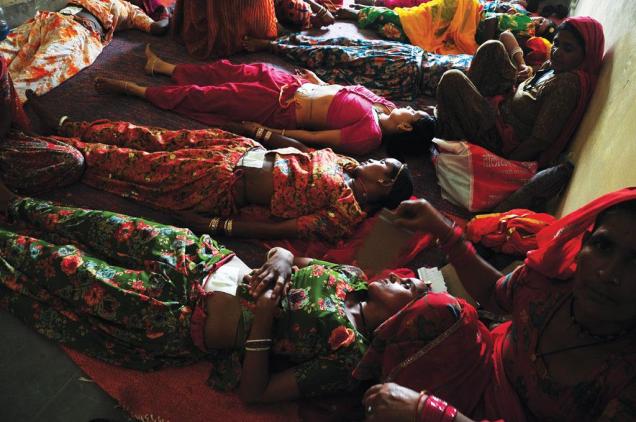
The overpopulation myth that was started by Thomas Malthus in the eighteenth century was and is still promoted by powerful advocates and organizations to the present day. Although overpopulation was not true then and is not true today, it has been used to justify inhumane treatment of people in poor nations in the form of quotas on forced sterilizations and other involuntary population control measures as a condition for receiving foreign aid, including needed food aid during famines. In reality, it should be called elimination of the poor, since only the poor are targeted. Poverty, not overpopulation, is the problem, and that can be remedied by education, investment and job opportunities along with disease control, proper medical care, electricity and roads.

Here are a few important quotes from some of the promoters of this anti-human population control ideology.

In The Population Bomb, Paul Ehrlich said,

“A cancer is an uncontrolled multiplication of cells; the population explosion is an uncontrolled multiplication of people … we must shift our efforts from the treatment of the symptoms to the cutting out of the cancer. The operation will demand many apparently brutal and heartless decisions.”[1]

In a New York Times article, Ehrlich is quoted as saying “. . . A possibility that the government might have to put sterility drugs in reservoirs and in food shipped to foreign countries to limit human multiplication.” was envisioned today by a leading crusader on the population problem.[2]

Maurice Strong, founder and first director of UN Environment Programme (UNEP), co-founder of WWF, Secretary-General of the UN Conference on Human Environment in Stockholm (1972), the Rio Sustainable Development Summit (1992) and ex World Bank advisor, is quoted as saying, “Licenses to have babies incidentally is something that got in trouble some years ago for suggesting even in Canada that this might be necessary at some point, at least some restriction on the right to have a child.”[3]

He also said “Frankly, we may get to the point where the only way of saving the world will be for industrial civilization to collapse. Isn’t it our responsibility to bring it about?”[4]

Prince Phillip, Duke of Edinburgh, is quoted as saying “In the event that I am reborn, I would like to return as a deadly virus, in order to contribute something to solve overpopulation.“[5]

Jacques Cousteau is quoted as saying, “World population must be stabilized and to do that we must eliminate 350,000 people per day.”[6]

POPULATION CONTROL IN INDIA

Total fertility Rate:1970 5.5
Total fertilityRate:2015 2.5
Population growth rate 1.2%
Women sterilized: total 30%
Women sterilized: married 37%
Women sterilized: unmarried, sexually active 48%
Women sterilized: informed about other contraceptive methods 28%
Women sterilized: informed procedure was permanent 66%
Men sterilized 1%
Sex-ratio at birth (males: females) 112:100

Source: Data compiled from the UN Population Division and the Demographic and Health Survey. Population Research Institute at http://www.pop.org 

Sterilization Camp in India


[1] Paul Ehrlich, 1968

[2] Gladwin Hillspecial, “A Sterility Drug In Food Is Hinted; Biologist Stresses Need To Curb Population Growth,” New York Times, November 24, 1969, https://www.nytimes.com/1969/11/25/archives/a-sterility-drug-in-food-is-hinted-biologist-stresses-need-to-curb.html. See also Paul Ehrlich and John Holdren, Ecoscience: Population, Resources, Environment (New York: W.H. Freeman & Co, 1977).

[3] Maurice Strong, occasion uncertain, but widely quoted.

[4] Maurice Strong, in opening remarks, UN Sustainable Development Summit, Rio de Janeiro, 1992.

[5] Prince Phillip, Duke of Edinburgh of England, 1988, from Cawthorne, Nigel, 2015, I know I am rude, but it’s Fun: The Royal Family and the World at Large – as Seen by Prince Philip

[6] Cousteau, Jacques, “Interview with Jacques-Yves Cousteau,” The UNESCO Courier, November 1991, 13.

The Overpopulation Myth as Excuse to Control the Poor

Communism, Environmentalism and the Overpopulation Myth

In 1798 the English economist and statistician Thomas Robert Malthus,[1] whose father was a friend and admirer of Hume and Rousseau, published An Essay on the Principles of Population[2] in which he predicted future starvation based on the assumption that the rate of population growth would far surpass the growth rate of food supplies. Using this, he proposed draconian measures to “fix” an assumed overpopulation problem at a time when world population was below one billion. Even to this day, with 7 billion people, the world is not overpopulated except in certain crowded city neighborhoods, but population control advocates still push the myth.

Malthus made two major erroneous assumptions:

  1. Genetic inferiority and enhanced fertility of less accomplished peoples
  2. No improvement in crop yields per acre.

Malthus recognized two types of solutions to the “problem”: positive and preventative. The positive restraints were things like wars, disasters, starvation, and epidemic diseases that keep populations and lifespans low. In this sense, such tragedies were seen as a good thing. The preventative restraints were government and voluntary control over marriages, self-restraint, and reduction of public charity. Aid to the poor was seen as a bad thing, perpetuating the supposed population problem.

Using his erroneous assumptions of an overpopulated world on the brink of starvation as a reason, Malthus advocated government measures to reduce population growth rates among the poor such as regulating marriage and educating for moral abstinence. However, he opposed nutritional relief and improved hospital access among the poor that would have reduced infant mortality and extended life spans. In his opinion, helping the poor only made the supposed overpopulation problem worse and prevented the development of the ideal utopian dream of the materialists of the day, such as William Godwin, Rousseau, and his father Daniel Malthus, who envisioned a utopian future of anarchic communism, absolute equality, and elimination of poverty. However, raising the standard of living of the poor by education, employment opportunities, and improved healthcare would have been a better way of accomplishing his stated goals of stabilizing both the population and food supplies.

“Instead of recommending cleanliness to the poor, we should encourage contrary habits. In our towns we should make the streets narrower, crowd more people into the houses, and court the return of the plague. In the country, we should build our villages near stagnant pools, and particularly encourage settlements in all marshy and unwholesome situations. But above all, we should reprobate specific remedies for ravaging diseases; and restrain those benevolent, but much mistaken men, who have thought they were doing a service to mankind by projecting schemes for the total extirpations of particular disorders.”

—Thomas Malthus

Malthus also never considered the fact that a larger population would allow for a greater division of labor and result in increased efficiency and prosperity. People were seen only as consumers, not as contributors to the economy. He never envisioned that these “lower classes” would be capable of improving their lives with proper care and education. Instead, he viewed them as genetically inferior and incapable of improvement or accomplishment. In his opinion, lower classes were in a permanent social class by birth and genetics. He extended this same philosophy to Africa where he observed, as a positive, that the tsetse fly and malaria helped to keep human population numbers low and life spans short, thus preserving wildlife and its habitat. Here are the first seeds of environmentalism and its link to the overpopulation myth.

“We are bound in justice and honor formally to disclaim the right of the poor to support.”

—Thomas Malthus

He assumed that the only way to grow more food was to increase the number of acres under cultivation, which limited the total “carrying capacity” of any region and indeed the world. Thanks to the Green Revolution of modern agriculture, beginning in the 1950s and 1960s, and later technological developments, we now know that yields have improved by orders of magnitude through things like introduction of more prolific, disease resistant plant varieties and high yield hybrids, nitrogen and mineral fertilization, mechanization, and control of weeds and crop destroying pests like insects and rodents.

Nor did Malthus foresee the natural reduction of family size that usually occurs when people are raised beyond near-starvation subsistence and when diseases are controlled, thereby reducing high childhood mortality rates. Gradual shift from purely agrarian to free-market trade and industrialization also reduces populations because larger families are not needed for subsistence farming.

            Karl Marx, a contemporary of Darwin, read Malthus’ book but disagreed with his premise of limiting the poor to further society. Instead Marx argued that the exploitation of the poor by the rich, that is, oppression of the proletariat by the bourgeois, was the cause of poverty. However, rather than help raise their standard of living through economic means within the system, Marx sought to use the poor to overthrow established authority, which had in reality supplied both charity and employment to raise the standard of living of the people.

            The utopian dream and the exploitation themes were the early seeds of socialism and Communism. Both the Malthusian and Marxist views were detrimental to the poor; on the one hand denial of aid to the poor to raise their standard of living, and on the other hand use of the poor in attempts to overthrow authority that might have supplied such aid. Note that Malthus and his communistic associates lived over seventy years before Marx put the Communist philosophy on paper in the Communist Manifesto (1848).

It is also true that the racial superiority attitudes of the seventeenth century and earlier ages have been a persistent, though often not fully recognized, thread throughout the history of Western civilization of kings, serfs, slaves, and colonization of other lands. This same perverted philosophy persists today among progressives who only typically want to manage the poor while keeping them poor and “in their place,” that is, controlled.

Malthus was pushing evolution and eugenics long before Charles Darwin and Frances Galton, the supposed originators of these theories. Charles Darwin and Alfred Wallace, founders of the theory of evolution, both had copies of Malthus’ book, which talks about changing conditions causing physical changes, the genetic inferiority of the poor and less developed cultures and races, and the need to control them. Darwin, in his own book, On the Origin of Species (1859), explains evolution as, “this is the doctrine of Malthus applied to the whole animal and vegetable kingdoms.” Like Malthusian philosophy, the mechanism of evolution, survival of the fittest through natural selection, depends on competition for scarce resources as the basis of survival.

[1] The popular press calls him a minister, but he was no more a minister than Charles Darwin was, although both had studied theology for their wealthy families and had been assigned an Anglican ministry.

[2] Thomas Robert Malthus, An Essay on the Principles of Population (London, 1798).

***************************************************************************

If you like this post share it with your friends, and sign up to follow this blog by email. Thank you.

The book: Saving Africa from Lies that Kill: How Myths about the Environment and Overpopulation are Destroying Third World Countries will be published in October, 2018. Print and e-book will be available online and in bookstores.

My first book, Perverted Truth Exposed: How Progressive Philosophy has Corrupted Science was published in 2016. It is available in print and e-book, on line only, through World Net Daily store, Amazon, Books-A-Million and Barnes & Noble.  See the companion blog at www.realscienceblog.com  for related posts and pages.

History of Africa – Early Colonial Period

Africa was divided up between European powers which thought they were superior to Africans, who were assumed to be genetically inferior and in need of being “taken care of” by superior “civilized” peoples.  Unfortunately, colonial powers failed to develop the infrastructure, the economy and to educate the people, so Communists found it easy to enslave the people while tearing down existing systems in the name of independence, without preparing the people for building a better one.  In many ways, this same belief system of inferiority and hopelessness is responsible for the continuing deprivation and abuses based on eugenics, the overpopulation myth and environmental myths that value wildlife and “saving the planet” over developing indigenous peoples and their economy. Poverty, not overpopulation, causes environmental damage. Developing a healthy, educated workforce and a strong economy make is possible for indigenous peoples to care for their environment. See short article below about the European partition of Africa from the Oxford Reference website.

Berlin Conference of 1884–1885 Meeting at which the major European powers negotiated and formalized claims to territory in Africa; also called the Berlin West Africa Conference. 

The Berlin Conference of 1884–1885 marked the climax of the European competition for territory in Africa, a process commonly known as the Scramble for Africa. During the 1870s and early 1880s European nations such as Great Britain, France, and Germany began looking to Africa for natural resources for their growing industrial sectors as well as a potential market for the goods these factories produced. As a result, these governments sought to safeguard their commercial interests in Africa and began sending scouts to the continent to secure treaties from indigenous peoples or their supposed representatives. Similarly, Belgium’s King Leopold II, who aspired to increase his personal wealth by acquiring African territory, hired agents to lay claim to vast tracts of land in central Africa. To protect Germany’s commercial interests, German Chancellor Otto von Bismarck, who was otherwise uninterested in Africa, felt compelled to stake claims to African land.

Inevitably, the scramble for territory led to conflict among European powers, particularly between the British and French in West Africa; Egypt, the Portuguese, and British in East Africa; and the French and King Leopold II in central Africa. Rivalry between Great Britain and France led Bismarck to intervene, and in late 1884 he called a meeting of European powers in Berlin. In the subsequent meetings, Great Britain, France, Germany, Portugal, and King Leopold II negotiated their claims to African territory, which were then formalized and mapped. During the conference the leaders also agreed to allow free trade among the colonies and established a framework for negotiating future European claims in Africa. Neither the Berlin Conference itself nor the framework for future negotiations provided any say for the peoples of Africa over the partitioning of their homelands.

The Berlin Conference did not initiate European colonization of Africa, but it did legitimate and formalize the process. In addition, it sparked new interest in Africa. Following the close of the conference, European powers expanded their claims in Africa such that by 1900, European states had claimed nearly 90 percent of African territory.

by Elizabeth Heath for Oxford Reference

http://www.oxfordreference.com/view/10.1093/acref/9780195337709.001.0001/acref-9780195337709-e-0467

*********************************************************************

If you like this post share it with your friends, and sign up to follow this blog by email. Thank you.

The book: Saving Africa from Lies that Kill: How Myths about the Environment and Overpopulation are Destroying Third World Countries will be published in October, 2018. Print and ebook will be available online and in bookstores.

My first book, Perverted Truth Exposed: How Progressive Philosophy has Corrupted Science was published in 2016. It is available in print and ebook, on line only, through World Net Daily store, Amazon, Books-A-Million and Barnes & Noble.  See the companion blog at www.realscienceblog.com  for related posts and pages.