
via Kenya reconsidering GMO crop ban to support food security — Genetic Literacy Project

The rural poor in developing countries need immediate solutions for improved health and economic development. Education is at the root of most of these solutions and most can be quickly implemented. Among immediate solutions are the following:
1. Education. The number one need is education. All other improvements spring from that knowledge. For example, with a knowledge and understanding that invisible microbes and worm eggs cause disease, measures can be undertaken to reduce or eliminate them from water, food and surroundings. If the people believe diseases are caused by witchcraft or other capricious magic, there is no incentive to improve their infrastructure. Once they understand that there are logical causes for diseases and that solutions are possible, improvements will be inevitable.
2. Clean Water. This can be accomplished without electricity by inhabitants if they are shown how. Clean water wells, low sand dams, slow sand filters or similar clean water resources will go a long way toward eliminating the number one killer of infants and young children, diarrhea from contaminated water. If you understood that giving your babies and toddlers contaminated surface water could make them very sick or kill them, you would gladly do whatever it takes to avoid that source or to purify the water before drinking it, and you would want to help provide and maintain other sources of clean water. They would too.
3. Sanitation. Digging pit toilets can end open defecation and disposal of raw human waste in fields, which can reduce water contamination, illness and parasites from these sources. Human and animal wastes can still be used on fields for fertilizer, but only after composting for months or a year to eliminate harmful microbes and worm eggs. Ending open defecation and wearing shoes can end most worm infestations. Composting before using manure has an added bonus because raw or “green” manure can harm plants unless allowed time to decompose. Otherwise it can “burn” plants. NOTE: “green manure” as used here is historical terminology for poorly decomposed or raw manure. Under new terminology, green manure refers to plant material that is composted.
4. Insect and Disease Control. Here again, education is important for understanding measures to prevent mosquito breeding and to protect themselves from bites. DDT and other insecticides offer real hope for reducing or eliminating insect vectored diseases. Bed nets treated with insecticides will reduce bites on sleeping people, but that is only part of the answer. Flies, fleas, lice, ticks and mites also carry many diseases, so elimination of these insects from within the home is important. Diseases and parasites can be cured with medicines and medical facilities, ending the cycle of spreading diseases.
5. Roads. Passable roads are important to break the isolation trap. Many road improvements can be done gradually by villagers if there are enough healthy people and incentive to do the work. Roads are important to be able to get to medical facilities and for access to markets to sell their crops. Roads connected to towns are important to attract industry and investment in rural areas.
6. Electricity. Access to electricity or gas for cooking and heating can reduce indoor air pollution from bio-based cooking fires and facilitate water purification for homes, schools, clinics and hospitals. With electricity, houses can be closed against insect entry by using screens and fans for cooling. With electricity, refrigeration is possible for safe storage of foods. Electrification usually needs input from outside the village to accomplish. Mini and micro loans can be used to build local low capacity hydroelectric dams/waterfalls or diesel power plants and medium to low voltage transmission lines locally. All other short-term solutions listed here can be accomplished very quickly by knowledgeable, healthy, and trained inhabitants. Again, education is the key. Teaching local people how the do these things will go a long way toward raising their standard of living, improving their quality of life, providing a healthy workforce, lowering under-five mortality, providing a healthy workforce and raising life expectancy.
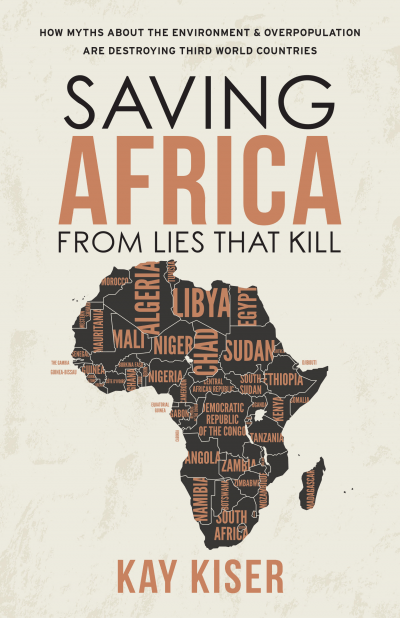
Details, instructions and explanations of each of these solutions can be found in my book Saving Africa From Lies That Kill: How Myths about the Environment and Overpopulation Are Destroying Third World Countries. It is available on Amazon, Barnes & Noble, Books-a-Million and similar outlets in print and as eBook. After reading it, share it with others and send a copy to other people that can help implement these measures. Please, also leave a review on Amazon. Your review will help to get a wider exposure for distribution of this important message.
Don’t forget to sign up to my blog with your email address to receive updates.
The 6thedition of the BCW (Building and Civil engineering Works) and Infrastructure Conference will be held Addis Ababa, Ethiopia on the 10-11 October 2019. The conference aims to explore how to develop public and private partnerships, promote infrastructure development in a more adapted and dynamic way, as well as position Africa as a destination of […]

My new book, Saving Africa From Lies That Kill: How Myths about the Environment and Overpopulation are Destroying Third World Countries is now available online and in book stores everywhere. In print and eBook through Amazon, Barnes & Noble, Books a Million. Note: some bookstores may not have it yet, but asking for them to order it for you will help to get it on the shelves faster.
From the back cover: In Saving Africa From Lies That Kill, Kay Kiser exposes the long-standing crimes committed against developing nations by the United Nations, World Bank, USAID and Planned Parenthood. Under their guise of “aid,” these organizations mire the underprivileged in isolation, poverty, sickness, and ignorance.
In her book, Kiser argues:
•Poverty, not overpopulation, causes environmental damage. Higher standards of living and lower infant mortality can improve the environment and stabilize the population.
•Developing nations need access to reliable electricity in order to end energy poverty. This will, in turn, provide clean water, develop transportation, and power hospitals, homes and industrial investment.
•Africans aren’t lazy; they’re weakened from malaria, parasites and dysentery. They need insect and disease control for a healthy workforce.
•The Green Revolution and modern agriculture can feed everyone and end deforestation.
Fortunately, you can do something about the problem—and Kiser shows you how!
After reading the book, please remember to review it on Amazon; share it with a friend and do your part to end bad practices. Visit my blog for more information and to sign up for email updates at https://savingafricafromliesthatkill.com/ and like my Facebook page.
Siemens (www.Siemens.com) today announced it has signed a Memorandum of Understanding (MOU) with the Federal Democratic Republic of Ethiopia to support the government’s objective of becoming a low middle-income country by 2025. The Memorandum of Understanding (MoU) addresses the country’s energy and infrastructure sectors. Other key aspects of the agreement include financing concepts that will… […]

Many people are encouraged and sometimes paid and helped to leave their countries by their governments. Removal of unemployed potential trouble makers is beneficial to the government in power. It is a kind of safety valve, ensuring continuation of corrupt government power that might otherwise be challenged.
Developing countries profit from emigration in two ways. First, unemployed citizens that leave the country lift the burden of providing for them and eliminate a source of civil unrest or political challenges. Secondly, the economies of poor countries benefit from remittances, i.e. money sent back to families in their home countries. Some countries depend on these remittances to prop up their economies. For example, in 2016 Mexico officially received $26.1 billion in remittances sent back to families by Mexican immigrants, mostly from the United States. That’s roughly 2.5 percent of Mexico’s GDP, which is a significant contribution to the country’s economy. Because this is an estimate with no way of knowing the exact amount, it may be much higher.
Remittances account for a significant part of the GDP of some developing countries in Africa. See values from World Bank/IMF, in the table below. As expected, the neediest countries receive the most remittances as a % of GDP. Although Nigeria is on the low side as a % of GDP, it is the most populous with comparably higher GDP, so that the actual amount is quite high.
| Country | Remittances as % of GDP |
| Liberia | > 20% |
| Cameroon | > 15% |
| Gambia | > 15% |
| Lesotho | > 10% |
| Senegal | > 10% |
| Cape Verde | > 10% |
| Togo | > 3% |
| Mali | > 3% |
| Ghana | > 3% |
| Nigeria | > 3% |
Source: “Where to Invest 2018,” Rand Merchant Bank, from World Bank/ IMF data
The Foreign Aid Trap
Government to government foreign aid with little or no accountability is also a part of this picture. Very little of the foreign aid actually gets to the people who need it, much less to infrastructure building that can encourage investment and raise standards of living and health. Leaders get rich while their people remain in poverty, sickness, ignorance and isolation. Corrupt dictators and their regimes benefit from keeping their countries poor. As long as the people are needy, the aid keeps coming. Raising the economy and standard of living has the opposite effect. Corrupt governments are only accountable to their international donors, not the people. Any foreign aid should be temporary emergency relief with strict accountability for its use. Without unaccountable foreign aid, governments would be dependent on their tax base. They would be forced to encourage investment, develop infrastructure and contribute to economic development.
Additionally, poor countries have been prevented from developing by UN, advocacy groups and their own corrupt leaders. What these countries need are Infrastructure, (roads, reliable electricity, etc.), Investment (foreign and domestic), Employment, Education and Disease Control.
Natural and Artificial Migration
What is the reason for much of the new waves of migration flooding Europe and the United States? Are conditions getting that much worse in their home countries than previously, or is there another answer? According to open borders believers, it is because overpopulation is getting so bad. I have heard the refrain, “they are escaping from overpopulated countries because they have no place else to go.” That is pure rubbish aka propaganda. This myth is pushed by the United Nations and advocacy groups promoting a worldwide campaign for population control and open borders. The world is far from overpopulated by any definition, whether it is food scarcity or room for the people. Hunger usually has more to do with politics than anything else.
It is important to point out that there are two types of immigration, Illegal or unauthorized and legal or sanctioned by receiving countries. Sending countries have historically been allowed by receiving countries to send people at a reasonable rate that allows for absorption with minimal cultural disruption. Strict guidelines have always required good health, no criminal record and evidence of self-support or a sponsor.
While a trickle of unauthorized migration with no supporting documentation has always happened, the current flood of unauthorized immigrants is a fairly new phenomenon. In many cases it is more like an invasion, complete with militant behavior, than simple migration. The flood is composed mostly of young, able bodied men, with only a few women and children. Poverty, overpopulation and violence, in the form of wars and civil unrest, are three of the “reasons,” aka excuses, given for the flood. However, these causes cannot explain the huge increase in numbers because there has been little or no change in the amount of distress in the world. What could have caused this sudden onslaught?
While some migrants are fleeing from violence in war torn areas, most are not, and they certainly are not displaced by the supposed struggling hordes of overpopulation. The image projected by pictures of overcrowded city slums is of wallowing masses of destitute people. That is certainly not the case for most of the world. Most of the people in poor countries are concentrated in cities for job opportunities, not because there is nowhere else to go. The remainder of each country is, if anything, under populated. So, if not overpopulation, why do they leave their homes for a strange land?
This is being encouraged by advocacy groups for various reasons, including those who want to bring down Western civilization such as Islamists, Communists and their sympathizers. The new flood of migrants originated, largely as a way to disrupt Western civilization and impose socialism, Communism or Islamic Sharia Law and is supported by money and propaganda from advocacy groups. People are paid, promised jobs, given new clothing, supported on their journey with food, water and shelter, and often given ship or rail passage. Where does all this money come from? It comes from wealthy donors and other backers that seek to change the world to fit their ideologies.
**************************************

My new book, Saving Africa From Lies That Kill: How Myths about the Environment and Overpopulation are Destroying Third World Countries is now available in print and eBook through Amazon, Barnes & Noble, Books a Million. Learn how you can help.
After reading the book, please remember to review it on Amazon; share it with a friend and do your part to end bad practices. l

Violence is one of the excuses used to unnecessarily prolonging primitive conditions in Africa that long ago should have been replaced with roads, electricity, safe water and sanitation systems, improved homes, schools, medical clinics, modern agriculture, industry, foreign and domestic investment, international markets and trade. Africa needs Investment, Infrastructure, Education, Employment and Disease Control, not population control and extreme cultural preservation imposed through international interference.
I recently talked to a friend who had been convinced by a person from South Africa that violence and prejudice among rural Blacks are the reasons for the primitive conditions, and the reason why changing the situation is hopeless. The rural Blacks were seen as savages without normal human emotions and aspirations for their families, unwilling to improve their lot. This reflects the long-standing, internationally held prejudice, dare I say worldview, revealed in my book, that the rural poor in developing countries are genetically inferior, unwilling and incapable of improvement, and overpopulated, all of which are untrue. My friend was sure that I was quite naïve about true conditions in African and other developing countries. She did not know about my own work and life experience with the many people from developing countries who shared their experiences with me and proved the prejudices to be wrong.
Of course, I recognize the existence of violence, prejudice and superstition among powerless poor people. However, these continuing problems, including violence, are a result of, not the cause of, long-standing primitive conditions imposed by international organizations and corrupt domestic governments. Because my book is about correcting conditions brought about and continued by international Western powers, and not about local internal problems, I have not spent a lot of time on descriptions of specific internal conflicts other than to point out that corrupt governments almost guarantee such reactions among the powerless and dispossessed.
African countries would have progressed beyond primitive conditions long ago if they had been allowed and encouraged to develop apace with the rest of the world. Colonial powers and later Communist influenced corrupt dictators failed to educate the people and develop infrastructure such as roads and electrical systems that could eliminate isolation and develop the rural economy beyond subsistence. Foreign aid without accountability has propped up corrupt leaders who actually benefit from keeping the people poor, isolated, sick and ignorant, so that foreign aid keeps coming. Foreign aid should be replaced with foreign and domestic investment, and accountability of the leaders to the people, not their donors.
While businesses in many cities are growing at a rapid pace, much of rural Africa is stuck in the 18th century, where we all once were. Many rural poor constantly exist at the mercy of the next drought, flood or epidemic, without knowledge or appreciation of microscopic pathogens and parasites, while feeding themselves by slash-and-burn subsistence farming of low yield, unimproved crops, much of which is lost to vermin and insects. Modern agriculture can end deforestation, improve nutrition and can stabilize the population through reduced infant mortality. Modern agriculture, education, medical care, access to markets, electricity and industrial employment could alleviate much of the suffering.
Want to help? My book outlines some of the many ways you can get involved.
**************************************
My new book, Saving Africa From Lies That Kill: How Myths about the Environment and Overpopulation are Destroying Third World Countries is now available online and in book stores everywhere. In print and eBook through Amazon, Barnes & Noble, Books a Million. Note: some bookstores may not have it yet, but asking for them to order it for you will help to get it on the shelves faster.
After reading the book, please remember to review it on Amazon; share it with a friend and do your part to end bad practices. Visit my blog for more information to sign up for email updates at https://savingafricafromliesthatkill.com/ and like my Facebook page.

UN committee rejects educational progress, refuses to respect the choices of the poor.
via UN Thwarts Slum Schools – Part 2 — Big Picture News, Informed Analysis

A project begun nearly 15 years ago is finally coming to fruition, as Nigeria is poised to become the first country to release a genetically modified variety of insect-resistant cowpeas to farmers.
“The cowpea growers have been very supportive. They like the GM crop. They have seen it perform and they are ready to grow it,” Issoufou Kollo Abdourhamane, the project’s manager at the African Agricultural Technology Foundation (AATF), told me.
 Cowpeas, known as black-eyed peas in the United States, are a key source of protein for over 200 million people, mostly in West Africa. However, the destructive pod borer insect can cause yield losses of up to 80 percent, and conventional breeding methods have been unable to help.
The GMO crop has shown strong resistance to the pest in field trials so far. Scientists used genetic engineering to insert a single gene from Bacillus thuringiensis (Bt), a soil bacterium commonly used as an approved natural insecticide and sprayed on crops by organic farmers.
Several crops now utilize the Bt technology to protect against insects, including corn and soybeans in the US, cotton in the US and India, and eggplant in Bangladesh. Monsanto developed the first Bt crop, corn, in 1996. Today, over 75 percent of the corn grown in the US is Bt.
The intellectual property for the Bt gene was provided by Monsanto to the project royalty-free. This, along with initial funding from the Rockefeller Foundation and sustained funding for the past decade from the US government’s Agency for International Development (USAID), will allow the seeds to be distributed to farmers at no cost. Monsanto has also provided Bt traits royalty-free for other development projects, such as eggplant in Bangladesh and corn in Africa.
Read more . . . Plagued by pest, African farmers may soon have access to insect-resistant GMO cowpeas—for free
The Truth about GMOs: good or bad?
In boon to poor farmers, Ghana poised to introduce GMO crops — Genetic Literacy Project

Energy Poverty as a Reality
42.6 Percent of Africans have access to electricity, mostly in cities and towns. 600 million Africans have no access to electricity
Source: International Energy Agency
Let’s take a mental trip to what life is like in most of Africa. Imagine what would happen if the developed world suddenly was without electrical power, maybe a massive snowstorm or an electromagnetic pulse, (EMP), wiped out the grid for months or years. At first, it would be inconvenient to be without lights, phones, cell phones, TV, radio, heating and cooling, cooking, or refrigeration at your home or business. Hospitals and other emergency facilities would go to emergency backup generators that run on gasoline, diesel, or natural gas. Most gas stations without backup generators could not pump gas because the pumps run on electricity. Without gasoline or diesel fuel, transportation would soon grind to a halt.
No deliveries mean even these backup generators would soon be useless. No deliveries would mean gas pumps, pharmacies, grocery, and other stores would run out of supplies. You would not be able to buy food or gasoline or refill needed prescription medicines. You would have to walk or ride a bicycle to a doctor, your job, a school or a library because cars would be useless. Many businesses would grind to a halt. Hospitals would not have power to preserve medicines or lighting to perform surgeries.
Without electricity, municipal or private water pumps would not work, so you would need to collect water from gutters or streams. Water purification would be a problem because water from streams is not usually safe to drink due to chemicals and biological contaminants. Filtering through sand, along with chemically treating with bleach and/or boiling would be required to avoid diseases and parasites. Sewer systems would not function, so alternative outdoor toilets would need to be dug and built. For those on private septic systems, it would be possible to use existing toilets by pouring water into them for flushing, but that would require carrying and storing more water from sources. What about toilet paper? That would run out and alternatives would be needed: newspaper, other papers, leaves, corncobs like they did in the not too distant past. All frozen and refrigerated food would spoil unless immediately preserved in another way, such as canning, drying, or pickling. If a disaster like this happened in winter, some foods may keep temporarily outdoors or in sheds.
Even if you had stored several months of survival foods, your chances of survival may depend on what season of the year such an event occurred. If it occurred at the end of winter, the chances would be best for nonperishable food supplies to last until you can plant and harvest your own food, but if it happened in the fall, you would have to keep yourselves warm and fed, not just until spring, but until harvest the following summer and fall, assuming you have seeds and a place to plant them. Nicely trimmed lawns would be impossible and would have to be turned into gardens for food production or pastures for livestock. If you have a fireplace, trees could supply wood for a time, but most trees would be destroyed in a few months to supply wood for heating and cooking. Would you make it through the first winter? Many would not.
If you are in a safe community, neighbors would probably help each other, and working together would offer the best chance for survival. In an urban setting, criminal activity by helpless and desperate people may be a problem. You would be on your own, stranded, relying on your meager food supplies that would soon run out. You would need to cook many of the foods, but even with gas grills, fuel would only last a short while. You may end up burning furniture, fences, sheds and trees for cooking and to keep you from freezing to death. Then what?
If you are lucky enough to own a little land and have seeds to plant, in several months, through backbreaking manual labor, you could have garden vegetables to eat, but you wouldn’t be able to get fertilizer or insecticides after initial supplies run out. You won’t have refrigeration, much less a freezer, to preserve your crop, so you will need a cellar for fresh vegetable storage and would need to can, pickle, or dry foods that can’t be saved that way. Canning requires heating a water bath, using precious firewood or dwindling supplies of propane from leftover tanks, so it is less desirable than drying.
Obtaining and preserving meat would be more difficult unless you were able to either raise chickens, ducks, rabbits, goats, or small game, or to fish and hunt enough game to support yourselves. Remember, everyone else would also be hunting and fishing those same areas, so raising your own would be more secure. If such a condition continued for years, seeds would need to be saved for subsequent years, small animals would need to be kept, fed and bred to provide an on-going supply of protein from meat, milk, and eggs. Those that survive would necessarily become small farmers just to live. Over the years, homes and farm buildings would need repairs and you may not be able to get needed supplies so you must improvise with whatever you can find. It would also be important to protect gardens and farm animals from poaching and from animals.
Such a disastrous loss of electrical power is about as close to the conditions in Africa as developed nations would come. Even at that, we still have certain advantages many Africans don’t have because of the infrastructure already present, such as secure, insulated houses with doors and windows to keep out the cold, insects, and rodents; roads and railroads to get from place to place by foot, bicycle, or horse; trained medical personnel, albeit with dwindling supplies; hospitals; and schools. There would be no more Internet or YouTube videos to learn almost any skill needed, so books would make a big comeback. We also have the advantage of knowing about the microscopic world that causes disease and food spoilage.
Now imagine if most of Africa and other underdeveloped countries had electricity. Everything involved in economic development and community well-being runs on electricity, including the infrastructure that provides gas and oil, water purification, sewage systems, development and maintenance of transportation systems, industry, medical clinics and hospitals, and schools, trade schools, and universities. Clean water and sewage systems could replace unsafe water carried from streams and open pit toilets at best, or open defecation in fields and streams that breed disease carrying flies. Screens on doors and windows could prevent insects from getting inside, and electric fans could be used for cooling. Refrigeration could provide safe food storage. Clean electric or natural gas burners could replace smoky bio-based heating and cooking fires that cause indoor air pollution.
With electricity, gas and oil exploration, pumping and refining could supply needed fuels for transportation and heating. Gas pipelines could pump natural gas to local community service centers and into homes. With adequate fuels and gas stations, roads and railroads could be built to accommodate trucks, buses, and cars and provide transportation to get to doctors, hospitals, schools, and other places. Industry, agriculture, and mines can provide jobs for millions and raise people’s living standards; improved roads and railroads could transport products and produce to markets. Needed fertilizers, insecticides, and medicines could be manufactured locally and transported to areas where they are needed.
With these two needs met, Africa has a bright and promising future. Without them, much of Africa will continue to wallow in disease, poverty, and misery. Of these two, electrical power is the greatest need because it will facilitate solving the other problems and connect isolated areas. Disease control is also very important because healthy workers are needed for industry, agriculture, infrastructure, medicine, and mining. It would be very difficult to run any kind of business if a significant portion of the workforce is absent each day because of diseases such as malaria, TB, or dysentery. It is important to address both power needs and disease control simultaneously, along with education, to raise their standard of living and kick start a potentially booming economy.
********************************************************************
If you like this post share it with your friends, and sign up to follow this blog by email. Thank you.
 The book: Saving Africa from Lies that Kill: How Myths about the Environment and Overpopulation are Destroying Third World Countries will be published on October 23, 2018. Print and e-book will be available online and in bookstores.
My first book, Perverted Truth Exposed: How Progressive Philosophy has Corrupted Science was published in 2016. It is available in print and e-book, on line only, through World Net Daily store, Amazon, Books-A-Million and Barnes & Noble. See the companion blog at www.realscienceblog.com for related posts and pages.