African Development Bank’s SEFA provides $1 million to kick off modernization of Africa’s Hydropower Fleet — Financing for Development in Africa

The Sustainable Energy Fund for Africa (SEFA) has approved a $1 million grant for modernization of Africa’s aging hydropower fleet. The grant will fund the mapping and evaluation of African hydropower facilities’ rehabilitation needs. It will also support the preparation of modernization works for two pilot facilities to a bankable stage, a move expected to add 200 […]

African Development Bank’s SEFA provides $1 million to kick off modernization of Africa’s Hydropower Fleet — Financing for Development in Africa

African countries deem EU carbon border levy ‘protectionist’ — Watts Up With That?

Some African countries consider the EU’s planned carbon border levy to be “protectionist”. That was the upshot of a conference organised by the French government on Tuesday (23 March), which examined the challenges posed by the EU’s upcoming mechanism. EURACTIV France reports.

African countries deem EU carbon border levy ‘protectionist’ — Watts Up With That?

The Future Looks Bright for African Countries

Longer Term Solutions

  1. End Population Control Campaigns
  2. End DDT Bans
  3. Implement Hygiene Education Programs
  4. Aggressively Treat All Worm Infestations
  5. End Insistence on Subsistence Farming
  6. End the European Union Ban on Importing GMO Crops
  7. End Insistence on Solar and Wind Power Only
  8. Provide Electricity and Clean Water Systems for City Slums and Rural Villages
  9. Encourage Foreign and Domestic Investment


  1. End Population Control Campaigns. We need to work to stop these campaigns by groups such as UNFPA, USAID, WHO, World Bank, International Planned Parenthood, Population Council, and Club of Rome. A few ways to do this are to
  • Expose the lies about overpopulation, their sources, and their aim. The overpopulation myth is all about socialist control, racism, elitism, and misguided environmentalism. Poverty, not overpopulation is harmful to the environment. Raising people out of extreme poverty will benefit the environment.
  • Defund all programs that promote involuntary or forced sterilizations, birth control, or abortion. Promote voluntary, informed choices only. President Trump reinstated the Mexico City Policy, which withholds funds from foreign aid programs that promote or perform abortions. He also defunded UNFPA through the Kemp-Kasten amendment, which prohibits funding for any organization supporting coercive abortion or involuntary sterilization. Unfortunately, some other population control advocacy groups have stepped in to fill the gap. The US must pressure the UN and member countries to end this practice worldwide. The US must also defund Planned Parenthood.
  • End overstocking population control drugs, devices and sterilization supplies in hospitals and clinics. Use the funds from this and other population control activities to stock medical facilities with medicines and supplies for endemic diseases such as malaria, TB and parasites. Medical facilities need supplies for treating injuries, surgical supplies and vaccination sera to save children’s lives.
  • Provide sanitation, clean water and soap for handwashing for all clinics and hospitals.
  • Train local people as medical assistants in the tradition of the field medic as a first line of defense.
  • End Western values-based sex education in schools that encourages abortion, multiple partners, and thus sexually transmitted diseases. These practices are contrary to local cultural and religious beliefs and practices. We must respect their cultural and religious beliefs, which value children and family above all else. Imposing Western values on them destroys families and results in the spread of sexually transmitted diseases. Encourage monogamy and fidelity in marriage to one sexual partner as one of the best ways to reduce sexually transmitted diseases.
  1. End DDT bans. Begin widespread spraying in homes and medicate victims to cut the cycle of malaria and other insect-borne diseases. The Environmental Protection Agency, the International Agency for Research on Cancer and other agencies that regulate possible toxins must change their regulations to allow DDT to be used for control of mosquitos and other insects. India is a good example of how effective this approach can be. In several government facilities, India manufactures DDT and other insecticides that can be purchased by people in African and other developing countries. India sprays DDT on interior walls of homes twice a year in malaria prone areas. This practice is a good first step in ending the malaria cycle and has greatly reduced the deaths from malaria in India. Africa could reduce theirs accordingly with DDT on interior walls as well as bed nets. Bed nets alone are not a good substitute for DDT spraying.

 Global Malaria Deaths[1]  India is included in the South-East Asia group.

  1. Implement Hygiene Education Programs. Focus on educating all people, especially rural poor, about microbes and hygiene. Teach skills needed to provide clean water such as: How to filter and purify water; How to make soap and set up handwashing stations; How to dig wells and latrines; Safe use of composted wastes for fields; How to keep waste and other contaminants out of streams.
  2. Aggressively Treat All Worm Infestations. Alongside treating for worms it’s important to provide shoes for all children to prevent re-infestation.
  3. End Insistence on Subsistence Farming as a more sustainable method. Encourage modern agricultural methods and improved varieties that are better suited to their environment, with higher nutrition and higher yields. This also ends or reduces slash-and-burn deforestation.
  4. End the European Union Ban on Importing GMO Crops. This and other protectionist philosophies, stagnate development in European countries and cause African countries to reject improved crops. Educate the people and the leaders of developing countries about modern agricultural methods and the benefits of GMO and other high yield varieties.  Educate European leaders and farmers about the potential market for their goods in developing countries. This can be accomplished through advertising campaigns to the general public, not just entrenched government leaders.
  5. End Insistence on Solar and Wind Power Only. Encourage large and small electricity projects by all means possible, including fossil fuel, hydroelectric, geothermal, and nuclear. Fund large and small hydroelectric and fossil fuel power plants and transmission lines into rural areas through loans. Until larger projects and grid systems can be implemented, promote local mini and micro hydroelectric, geothermal and fossil fuel systems. These small systems can be incorporated into a wider grid when that becomes available.
  6. Provide Electricity and Clean Water Systems for All City Slums. Improve housing, sanitation, and clean up standing water and wastes that breed insects and disease. Spray insecticides regularly to reduce insects that carry diseases. Cleaning up the slums can go a long way toward encouraging investments.
  7. Encourage Foreign and Domestic Investment. It is important to encourage investment in all sectors including agricultural, natural resource extraction, manufacturing, service sector and STEM (Science, Technology, Engineering, Math). It is time to re-examine the company town concept. Historically used for extraction industries in isolated areas, company towns can be useful for other businesses such as manufacturing, service and STEM in order to attract, train, and house employees and their families.

Encourage building of company towns with homes, hospitals, schools, and markets for employees in remote areas that provide electricity, clean water, latrines or sanitation systems. These company town projects should include progressively extending roads beyond the town over time to help others not directly employed but that could market agricultural products to town inhabitants. Such extensions over time can provide the basis of a larger transportation system that can encourage further foreign investment in newly opened business centers. Inhabitants of shanty towns (city slums) can be employed and live in new company towns near cities.

The future of Africa looks bright and development is booming in the cities and in more developed agricultural areas. The average GDP growth rate for sub-Saharan African countries is 6.2 percent. Cote d’Ivoiri, Ethiopia, Tanzania, Rwanda, and the Democratic Republic of Congo have GDP growth rates over 7 percent. This is great, but somewhat misleading since a percent of a smaller economy is a smaller amount of growth in real numbers. However, if these growth rates continue as they have been, it will result in real economic progress.

Although historically agriculture and extraction of natural resources have been the mainstays of African prosperity and development, half of all foreign investment in recent years has been outside natural resources. Of the countries that have this profile, a group of countries called the African Lions, which include Kenya, Uganda, Tanzania, Mozambique and Zambia, have led the way. Rwanda has had a growth rate of 9 percent since 2001 because of its favorable business creation policies. In Rwanda child mortality has been reduced, nearly all children have access to education and 98 percent have access to healthcare. Ethiopia has a growth rate of 10 percent but 20 percent of the population are still in extreme poverty with nutritional issues. Botswana has become a leader in online banking due to its low corruption levels and secure business environment.

Corruption is still an issue in many of the developing countries in Africa and elsewhere. Corruption, along with domestic unrest, is one of the major barriers to attracting foreign investment. This corruption is encouraged, supported, and prolonged by foreign aid given to the governments, not directly to the people or to infrastructure contractors. Many government leaders have fat bank accounts by skimming most of the aid that is intended to help the poor and build infrastructure. Even when aid is given in the form of goods, not money, a similar picture emerges. The people may get very little of it as the goods filling warehouses are either sold on the black market to the highest bidder or are left to rot for political reasons.

Any foreign aid needs to be tied to full accountability and transparency by governments about how the money is used and its impact on the people. Free ride foreign aid to governments must be ended to make leaders more accountable to the people, not just their foreign donors. This can lead to free and fair elections.

[1] WHO, 2016

**************************************************************************************

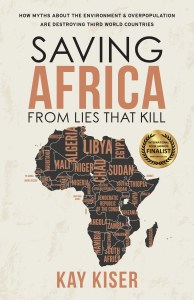
My award winning book, Saving Africa From Lies That Kill: How Myths about the Environment and Overpopulation are Destroying Third World Countries is now available in print and eBook through Amazon, Barnes & Noble, Books a Million.

Award-Winning Finalist in the Social Change category of the 2019 International Book Awards

After reading the book, please remember to review it on Amazon; share it with a friend and do your part to end bad practices. Visit my blog for more information and to sign up for email updates at https://savingafricafromliesthatkill.com/   and like my Facebook page.

Read the first chapter free through Bookfunnel by clicking here 

New Oil and Gas Fields in southwest Africa

Oil and Gas Discoveries and Activity in Southwest Africa Set to Open New Basins for Development and Trigger Big Investments in Namibia, Angola and South Africa (By NJ Ayuk)

By NJ Ayuk, Executive Chairman, African Energy Chamber (www.EnergyChamber.org) Last spring, the Maersk Voyager, an ultra-deepwater drillship under contract by French supermajor Total, drilled a wildcat well in the deepest water ever – 3,628 meters (11,903 feet) in Block 48, a massive area with potentially huge oil reserves in the Congo basin offshore Angola. The record-setting achievement wasn’t… Read more on https://africa-newsroom.com/press/oil-and-gas-discoveries-and-activity-in-southwest-africa-set-to-open-new-basins-for-development-and-trigger-big-investments-in-namibia-angola-and-south-africa-by-nj-ayuk?lang=en

Renewable Energy: Highly Inefficient and Environmentally Harmful

Renewable energy – not so clean, not so sustainable and not good for developing countries

Those profiting from the Climate Change and the renewable energy game don’t want you to see the Planet of the Humans movie, which reveals the ugly truths behind popular renewable energy schemes. It has been deleted from Youtube but was preserved at the site below. Watch and learn.

via Hide & Seek: Media Keep Burying Mike Moore’s Planet of the Humans & Bloggers Keeps Digging It Up — STOP THESE THINGS

NOTE: Although this is a good expose of renewable energy schemes, including solar, wind and biomass, there is even more to the story.  Cleaner and more sustainable alternatives are not mentioned, including nuclear, abundant clean natural gas, hydroelectric and geothermal energy.  Ecological harm, although mentioned as disrupting the environment, did not really include the huge tole on birds, bats and beneficial insects that are being chopped up or burned alive by wind turbines or mirror array solar energy farms.  The movie paints a depressing no-win picture of dwindling scarce resources, burgeoning population and unsolvable pollution problems. All of these assumptions are unfounded or exaggerated, now as they were 40 years ago.

Poverty, not high population, causes environmental harm. Raising the standard of living of poor countries through investment in energy,  transportation and healthcare infrastructure and jobs, as well as modern agricultural practices, can protect the environment, stabilize the population and reduce deforestation.

Additionally, to insist that poor countries forego fossil fuels, which have developed modern nations, and go straight to unreliable and intermittent wind or solar energy, is irresponsible or criminal.  See earlier posts at this site, and/or get my book: Saving Africa from Lies that Kill: How Myths about the Environment & Overpopulation are Destroying Third World Countries. To buy the book from Amazon, click hereRead the introduction and first chapter free through Bookfunnel by clicking here 


African Development Bank approves €8 million technical assistance grant to support preparation of Ruzizi IV Hydro Power Project in the Great Lakes region — Database of Press Releases related to Africa – APO-Source

The Board of Directors of African Development Bank Group (https://www.AfDB.org) has approved an €8 million grant drawn from the European Union’s Africa Investment Platform (EU-AIP) to support the preparation of the Ruzizi IV Hydropower Project. The plant will be situated on the Ruzizi River between Rwanda and the Democratic Republic of Congo and will supply […]

via African Development Bank approves €8 million technical assistance grant to support preparation of Ruzizi IV Hydro Power Project in the Great Lakes region — Database of Press Releases related to Africa – APO-Source

Climate Alarmist Banks Go Carbon-Colonialist

African Development Bank caves to UN and Environmentalist Pressure and abandons electrification goals.
See excerpts from this TownHall.com article below.  Read the full article by clicking here.

Climate Alarmist Banks Go Carbon-colonialist

Paul Driessen
|
Posted: Dec 28, 2019 12:01 AM

. . .

Climate Alarmist Banks Go Carbon-colonialistSource: AP Photo/Stephen Wandera

Editor’s note: This column is authored by David Wojick. 
Africa has the world’s lowest electrification rate. Its power consumption per capita is just 613 kilowatt-hours per year, compared to 6,500 kWh in Europe and 13,000 in the United States, African Development Bank (AfDB) President Akinwumi Adesina observed in July 2017. That’s 9.4% of EU and 4.7% of US electricity consumption. It’s equivalent to Americans having electricity only 1 hour a day, 8 hours a week, 411 hours per year – at totally unpredictable times, for a few minutes, hours or days at a stretch.It’s actually even worse than that. Excluding significantly electrified South Africa, sub-Sahara Africans consume an almost irrelevant 181 kWh of electricity per capita – 1.4% of the average American’s!

In Sub-Saharan Africa, over 600 million people have no electricity, and over 700 million rely on wood, grass and dung for cooking and heating. The region is home to 16% of the world’s population, and 53% of those without electricity. By 2050, its urban populations could increase by 600 million.

Determined to transform the “dark continent,” the AfDB launched a $12-billion New Deal on Energy in 2017 and a Light Up and Power Africa initiative in July 2018. It frequently emphasized that access to sufficient supplies of reliable, affordable modern energy – including fossil fuels – is critical for the continent’s social and economic development. Without energy, it is impossible to create jobs, increase productivity, reduce inequality, improve people’s health and wellbeing, or end poverty.

The bank’s lofty goal for its energy New Deal is 100% access to electricity in urban areas, and 95% in rural areas, by 2025. In July 2017, Mr. Adesina told the African Union Summit he was excited that “Japan has answered our call” to “adopt a balanced energy mix” that includes “its ultra-super critical clean coal technologies” that remove sulfur, nitrogen oxides and particulates, while greatly reducing CO2 emissions.

In 2018, the bank approved seed money for a Nigerian coal project and geared up to finance a 350MW coal plant in Senegal. It also initiated plans for a $2-billion coal-fired power station in the Kenya’s port city of Lamu, after the IMF, World Bank and other western lenders rebuffed Kenya.

But then Mr. Adesina and the AfDB caved in to carbon colonialist pressure. The bank now says almost nothing about coal or even natural gas. Its new themes include: responding to global concerns about climate change, gradually adopting a “low-carbon and sustainable growth path,” significantly reducing reliance on fossil fuels, and transitioning to “green growth” and “clean renewable energy,”

In September 2019, the bank announced that it planned to begin scrapping coal-fired power plants all across Africa, build “the largest solar zone” in the world, and pull funding for the Lamu power plant. “We’re getting out of coal,” Mr. Adesina said. “Coal is the past, and renewable energy is the future.”

So the AfDB has joined the World Bank, Goldman Sachs and other Multilateral anti-Development Banks in caring more about climate alarmism and avoiding criticism from the likes of Greta, the perpetually aggrieved and angry Grinch of Christmas 2019 – than they do about safeguarding the lives, livelihoods, health and living standards of hundreds of millions of electricity-deprived Africans.

This 180-degree flip-flop is delusional, dysfunctional and disingenuous. For many, it will be lethal.

. . .

Finally, banishing fossil fuels (and nuclear), and focusing on pseudo-renewable energy will mean millions of children and parents will continue to suffer and die needlessly every year from diseases of poverty and energy deprivation. This eco-manslaughter at the hands of climate activists and banks must not continue.

. . .

Read the full article here.


Mozambique’s Gas Projects Enter Implementation Phase — Database of Press Releases related to Africa – APO-Source

With a second FID in just 2 years, Mozambique has officially positioned itself as a key player in the global gas and LNG market for years to come. The latest FID on the US$20 billion Mozambique LNG project, makes it the largest sanction ever in sub-Saharan Africa oil and gas. Described by His Excellency President […]

via Mozambique’s Gas Projects Enter Implementation Phase — Database of Press Releases related to Africa – APO-Source

Amidst “record-breaking” production, US government shows appetite to develop industrial dialogue with Africa on LNG — Database of Press Releases related to Africa – APO-Source

With record-breaking US gas production this year, and the promotion of gas as a “cleaner, cheaper” energy source a continued priority for the current White House, the US Department of Energy is now looking towards Africa to develop opportunities in the exploration, production and monetization of LNG. In the words of Energy Secretary Rick Perry, […]

via Amidst “record-breaking” production, US government shows appetite to develop industrial dialogue with Africa on LNG — Database of Press Releases related to Africa – APO-Source

Help Developing Countries Join the 21st Century

How You Can Help Raise Economies and Improve Lives in Developing Countries

Reposted: Some social sites said this post was too long, so you can read the complete version at my blog here https://wp.me/p9Wxqa-d1 (recommended), or read the condensed version below which necessarily leaves out some information and references.

The list of things that need to be done to raise Africa and other developing countries out of extreme poverty and usher them into the twenty-first century is both comprehensive and achievable. Many of them involve ending interference by international organizations that often have hidden agendas unrelated to the welfare of the poor or raising the economy.

Dependency on foreign aid supports and encourages corruption and lack of accountability of government officials; it mires developing countries in debt from foreign aid in the form of low interest loans, causes inflation, discourages infrastructure improvements and economic development, and is devastating to the poor who rarely benefit from it. Instead, those in extreme poverty need education, employment, investment and infrastructure.

Included in these goals is a need for good health and relief from isolation through vehicle passable roads. As shown in previous posts, for example: Get Out of the Way! Let Africa catch up to developed countries, Immediate Solutions for Africa’s problems,  Long Term Solutions to Raise Developing Countries out of Extreme Poverty, there are reasonable steps to solving these problems, both in the short term through local infrastructure investments, and longer term though financing of larger infrastructure projects such as transportation projects, hydroelectric power dams and electrical transmission systems.

Business and industrial investment and trade are the ultimate means to raise their economies out of extreme poverty.  There are inviting investment opportunities, both foreign and domestic, for example see earlier posts: Investment Opportunities in Africa, New US Build Act encourages investment in Africa. The workforce is there; they just need more job opportunities, education and improved health.

As a whole, it seems like an insurmountable task, but taken item by item and step by step these problems are infinitely solvable. We have the advantage of not only having resources to help, but vast numbers of people who are disgusted with the state of affairs, want to raise the impoverished, and are willing to help, financially or through good old-fashioned, roll-up-your-sleeves hard work.

 What you can do, individually or in groups

In summary, we need to stop international organizations from continuing the propaganda and activities that have kept developing countries from advancing and that have prevented them from catching up with the rest of the world; and we need to raise the destitute out of extreme poverty through free trade by building infrastructure and improving employment opportunities.

environmental harm and failure to advance are blamed on the myths of overpopulation and inferiority of poor peoples. The truth is that poverty, often caused by deliberate deprivation and isolation, not overpopulation, causes environmental harm. Raising poor peoples out of extreme poverty, improving their health and implementing modern agricultural practices will stabilize the population and end deforestation.

 Get involved in any way you can, as often as you can.

I do not have all of the answers, but here are a few suggestions that can guide you to take action. Some of you, no doubt, will have other, perhaps better, ideas. The key is to get involved and stay involved in any way you can.

Information Sharing and Recruiting

Share information about short term infrastructure building charities and investment agencies through Facebook, Twitter, and other social sites. Make a YouTube video, blog, or website encouraging investment and exposing the crimes of international organizations

Inform as many people as possible about the true agenda and practices behind the following euphemistic phrases and biased propaganda.  Family Planning and Reproductive Health, Sustainable Agriculture, Climate friendly power, Cultural preservation.

 Contact agencies and government officials that are able to change things and spread the word about the need for ending practices such as population control programs, denial of DDT, denial of GMO and high yield crops, and modern agriculture; denial of clean water, sanitation and hygiene education; and denial of electricity by all means except solar and wind.

Call or write your congressman, the president, cabinet secretaries, state department heads. Include local and state governments and business organizations that can partner with organizations in developing countries or encourage investment.

 Join or donate to groups opposed to these misguided actions or that support major improvements. For example Population Research Institute is fighting the overpopulation myth and human rights abuses in population control programs in thirty countries.

 Send my book, Saving Africa from Lies That Kill: How Myths about the Environment and Overpopulation are destroying Third World Countries or excerpts from it to important people that can get things done and influence others.  Read the first chapter free through Bookfunnel at www.bit.ly/savingafricachapter1. (Kindle version is only $2.99 through Amazon.) Permission is given here to reproduce sections of my book freely to spread its message of hope and recovery.

Follow my blog, Saving Africa from Lies that Kill at www.savingafricafromliesthatkill.com. Reblog posts or use the links to repost on Twitter, Facebook and other social sites.

Charitable Activities

Donate to charities that build immediate infrastructure: wells, toilets, sand dams, sand filters, roads, improved housing, schools, and medical facilities by working directly with the people, not the governments, which may keep most of the donations. Recommended: World Vision, Samaritan’s Purse, Christian Broadcasting Network.

Medicine and health care supplies are badly needed. For many of these organizations, generous donors will match your donation. If you work for a corporation, many of them will match your donations, so you need to ask them if they support the charity to which you want to donate. Because many companies donate most of the materials and supplies, your donations may only have to cover the cost of shipping, so that your gift multiplies by typically five to eight times. Most of these charities have a catalog that allows you to see the options and their cost. Sponsoring a child or family can also be used to build schools and other infrastructure for an entire village.

Check out charities to make sure most of the money donated goes to aid the people, not the administration of the charity or receiving countries’ governments.

Support Christian missionaries in developing countries through your church. Along with preaching the Gospel, missionaries are involved in the communities they service in various ways including teaching, health care, and infrastructure improvements.

Go on summer mission trips with your church or other organization offering medical and educational assistance.

Volunteer to go and use your own talents and skills to help:

  • Build infrastructure such as wells, sand dams, schools, clinics, improved housing, agricultural projects, roads, and more.
  • Teach basic education, hygiene, agriculture, building trades, small business administration, and other needed skills.

Offer scholarships for outstanding students in these countries. Foundations, church and civic groups can sponsor scholarships, grants, or loans for education. Ask about existing scholarship programs and donate to worthy ones that help people from developing countries.

 Visit African and developing countries. Tourism is a significant source of income for many African and other developing countries.

Business Opportunities

Buy products from Africa and other developing countries.

Sell products from Africa and other developing countries in your own online or brick-and-mortar stores using online wholesale suppliers

Support businesses that locate or are willing to locate facilities in African or other developing countries. Inquire about pension and retirement plans to determine and request investments to include stocks and bonds in African or other developing countries.

Invest in African stocks or in companies that invest in Africa and other developing countries or in mining, manufacturing companies, and other industries with facilities in developing countries.

Start a new business: If you have funds to invest in new ventures or own a business, whether in manufacturing, communications, services, merchandising, mining, etc., consider opening a branch in an African or other developing country and hiring and training local people from their abundant workforce.

Build a company town to support their or your new manufacturing, mining or extractive business, their/your local employees and their families. You may want to locate a company town near city slums where there is a ready workforce in need of employment. Company towns can provide safe homes, electricity, clean water and sanitation, education and medical facilities for employees and their families, ensuring a healthy and loyal workforce.

Opportunities abound in African and other developing countries and are just waiting for someone with the insight and courage to implement them. Africans don’t need handouts to stay poor; they need jobs and someone to give them an opportunity.

 The bottom line is to get and stay involved, however you can, in activities that will ultimately raise the economies of developing countries, lift the rural population out of extreme poverty, end practices by outside organization that are contrary to the needs of the people and usher them into the twenty-first century. Africa and the developing world have a promising and bright future, but it will take all of us to foster the changes that are needed. It is possible, and you can make a difference. Many people will say, “Let George do it.”

Today, You Are George. What can you do? What will you do?

“If a brother or sister be naked, and destitute of daily food, and one of you say unto them, ‘Depart in peace, be ye warmed and filled’; notwithstanding ye give them not those things which are needful to the body; what doth it profit? Even so, faith, if it hath not works, is dead, being alone. Yea, a man may say, ‘Thou hast faith, and I have works’: show me thy faith without thy works, and I will show thee my faith by my works.”                                                  – James 2:15-20, KJV Bible

******************************************

The book: Saving Africa from Lies that Kill: How Myths about the Environment and Overpopulation are Destroying Third World Countries is available in print and eBook online at Amazon, Barnes & Noble, Books a Million and in bookstores. If you like the book, please leave a review online at Amazon.com or other outlet.

Award-Winning Finalist in the Social Change category of the 2019 International Book Awards

Read the first chapter free through Bookfunnel at www.bit.ly/savingafricachapter1